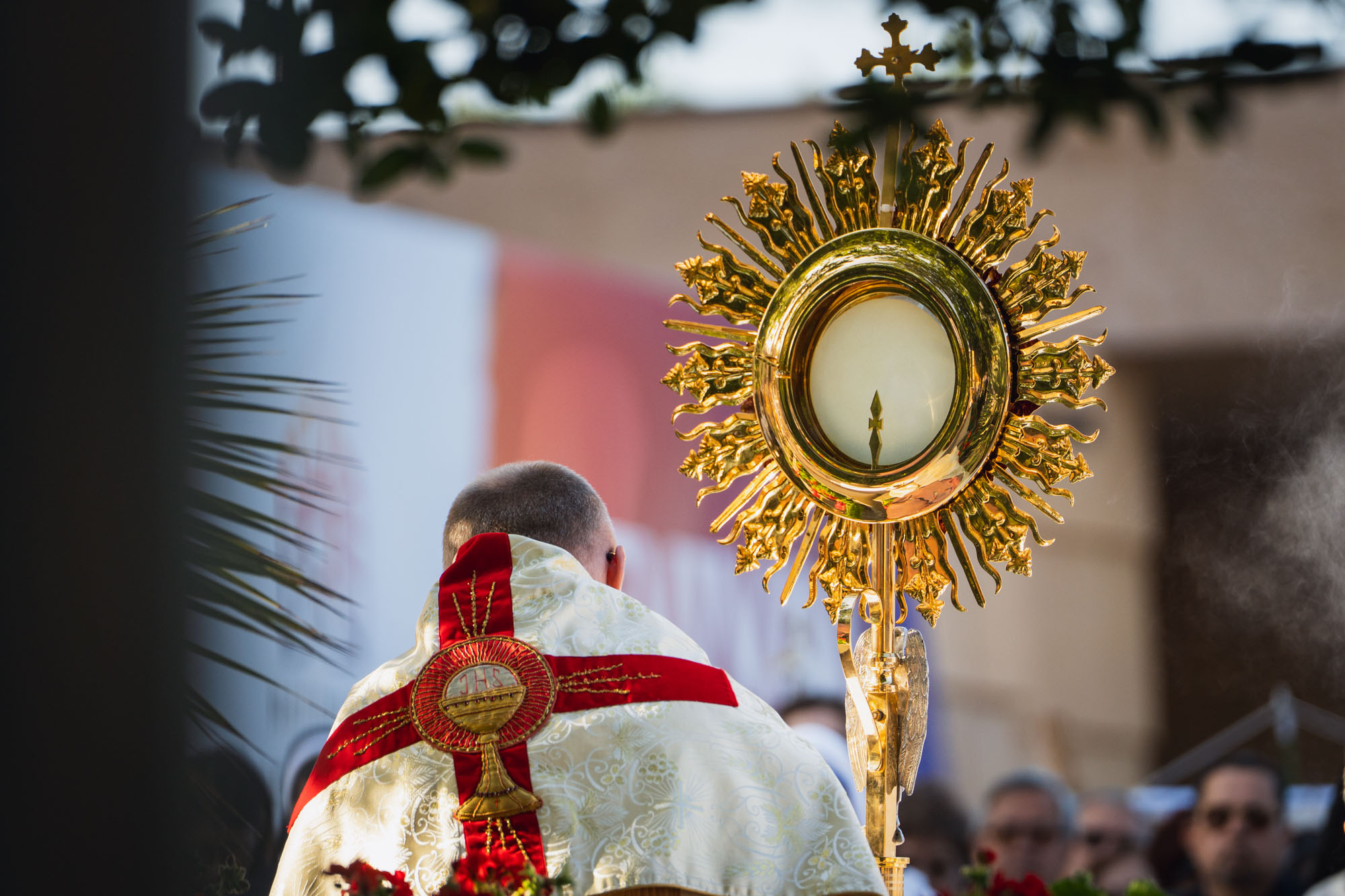
I have always wanted to know how many saints there are in the Catholic Church, so I decided to create my own list as I discover them! Join me on this journey, and let’s create a list of all the saints in the Catholic Church! Leave a comment with a saint that you know and is not on the list. It must be an officially approved person by the Catholic Church and can be a Saint, Blessed, Venerable, or Servant of God.(learn more about steps to sainthood here).
Every Saint will include short information about their lives and few facts:
Born: date
Died: date
Feast Day: date
Patronage: what intercession to ask for
Symbols and Attributes: how to recognize them
Relics: where you can find their relics
Comment with your favorite Saint or Saint that you are missing!
List of Saints in Catholic Church
“A”
St. Achilleus
Saint Achilleus was a Roman soldier who converted to Christianity and abandoned military duty because of his faith. His unwavering courage and devotion to Christ serve as an enduring symbol of faith in the face of persecution.
Born: Unknown (probably in the 3rd century AD).
Death: Martyred during the persecution under Emperor Diocletian
Feast Day: May 12 (commemorated alongside Saint Nereus)
Patronage: Soldiers and those converting to Christianity
Symbols & Attributes:
- Military gear or a sword (representing his role as a Roman soldier)
- Palm branch (a symbol of martyrdom)
Relics: Basilica of Saint Achilleus, Rome, Italy — their relics are located beneath the main altar.
St. Albert of Prague
Saint Albert of Prague was a Cistercian monk who eventually became Bishop of Livonia. Driven by a passion for evangelization, he left his homeland to introduce Christianity to the pagan communities of northern Europe. Despite the risks, he devoted himself tirelessly to promoting peace and conversion.
Born: c. 956, Prague, Bohemia
Death: 997, near Danzig (modern Gdańsk, Poland)
Feast Day: April 23
Patronage: Bohemia, missionaries, peacemakers, and those suffering persecution, Poland, Hungary, Czechia
Symbols & Attributes:
- Bishop’s staff (crozier) – represents his position as a bishop.
- Martyr’s palm branch – signifies his martyrdom.
Relics: Some relics are preserved in Prague, Czech Republic, and others – Poland and Germany, particularly in Gdańsk
St. Agatha
Saint Agatha was a noble-born young Christian woman who committed her life to God. When she rejected the propositions of a Roman official named Quintianus, he imprisoned and tortured her in an attempt to make her abandon her faith. Despite enduring severe torment, Agatha stayed loyal to her beliefs until she died in prison around 251 AD.
Born: c. 231, Catania or Palermo, Sicily
Death: c. 251, Catania, Sicily
Feast Day: February 5
Patronage: Breast cancer patients, rape survivors, bellfounders
Symbols and Attributes: Pincers, shears, breasts on a plate
Relics: Major one – Cathedral of Saint Agatha, Catania, Sicily, and others – churches across Italy and Europe.
St. Agnes
Saint Agnes was a young woman from Rome who devoted her life to Christ at a very early age, taking a vow of virginity. When she refused the marriage proposal of a Roman nobleman, she was accused of being a Christian and faced intense persecution. Despite threats, insults, and torture, she remained steadfast in her faith and was martyred around 304 AD, at the age of approximately 12-13.
Born: c. 291, Rome, Italy
Death: c. 304, Rome, Italy
Feast Day: January 21
Patronage: Engaged couples, chastity, children of Mary, gardeners, rape survivors
Symbols and Attributes: Lamb, palm branch, sword
Relics: Relics and memorials in Rome, Italy
St. Agnes of Assisi
Saint Agnes of Assisi was the younger sister of Saint Clare of Assisi and one of her first followers. Born into a noble family, Agnes was deeply moved by Clare’s decision to renounce wealth to follow Christ in a life of poverty and prayer. Despite strong family opposition, Agnes joined Clare at San Damiano, where she adopted the Franciscan ideal of humility, simplicity, and devotion.
Born: c. 1197, Assisi, Italy
Death: November 16, 1253, Assisi, Italy
Feast Day: November 16
Patronage: Religious communities, Young women, and the poor.
Symbols and Attributes: Lamb, Franciscan habit
Relics: Basilica of St. Clare, Assisi, Italy
St. Agnes of Montepulciano
Dominican nun and mystic Saint Agnes of Montepulciano was renowned for her holiness from an early age. At the age of nine, she joined a convent of nuns in Montepulciano, and at fifteen, due to her profound knowledge and spiritual insight, she was appointed abbess.
Born: 1268, Gracciano, Italy
Death: April 20, 1317, Montepulciano, Italy
Feast Day: April 20
Patronage: Sienna, those suffering from bodily ills
Symbols and Attributes: Dominican habit, lily, cross, book
Relics: Church of Saint Agnes, Montepulciano, Italy
St. Ailbe of Emly
Saint Ailbe is considered one of Ireland’s first bishops and missionaries, often called the “Patrick of Munster.” It is said that he was baptized and raised in a Christian family, and later, after being educated abroad, returned to Ireland to preach the gospel.
Born: 6th century, Ireland
Death: c. 528-534, Emly, Ireland
Feast Day: September 12
Patronage: Archdiocese of Cashel and Emly
Symbols and Attributes: Bishop’s attire, Celtic cross
Relics: Cathedral site of Emly, County Tipperary, Ireland
St. Albert The Great
Saint Albert the Great, a Dominican priest, bishop, and philosopher, is considered one of the greatest scholars of the Middle Ages. In 1931, Pope Pius XI canonized him and declared him a Doctor of the Church, making him an important reference in both theology and the blending of faith with science.
Born: c.1200, Lauingen, Swabia, Germany
Death: November 15, 1280, Cologne, Holy Roman Empire
Feast Day: November 15
Patronage: Scientists, philosophers, medical technicians, natural sciences
Symbols and Attributes: Bishop’s attire, book, globe, quill
Relics: Cologne, Germany
St. Alexis of Rome
Saint Alexis is revered as a model of self-sacrifice, humility, and complete trust in God’s providence, proving that true holiness often comes through secret service and devotion.
Born: c. 4th century, Rome, Italy
Death: c.5th century, Rome, Italy
Feast Day: July 17
Patronage: Beggars, pilgrims, travelers, the poor, homeless people
Symbols and Attributes: Cross, alms, stairs
Relics: Church of Saint Boniface, Rome
St. Aloysius Gonzaga
Saint Aloysius Gonzaga came from a noble Italian family. He renounced his claims to inheritance to become a member of the Society of Jesus (Jesuits). From a young age, he was recognized for his deep life of prayer, devotion to the Eucharist, and compassion for the poor and sick.
Born: March 9, 1568, Castiglione delle Stiviere, Duchy of Mantua
Death: June 21, 1591, Rome, Italy
Feast Day: June 21
Patronage: Young students, AIDS patients
Symbols and Attributes: Lily, cross, skull, rosary
Relics: Some relics – preserved in the Church of Sant’Ignazio, Rome
St. Alphonsus Liguori
Saint Alphonsus Liguori was an Italian bishop, theologian, and founder of the Redemptorist Congregation. His teachings emphasized God’s mercy, practical moral guidance, and pastoral care.
Born: September 27, 1696, Naples, Kingdom of Naples
Death: August 1, 1787, Pagani, Kingdom of Naples
Feast Day: August 1
Patronage: Lawyers, arthritis, Confessors, moral theologians, and vocations.
Symbols and Attributes: Bishop’s attire, book, cross
Relics: Basilica of Sant’Alfonso, Pagani, Italy
St. Alphonsus Rodriguez
Saint Alphonsus Rodriguez lived a life of simplicity, patience, and devotion to God, demonstrating that holiness can be achieved through humble service. Although he did not take ordination, he dedicated his life to the service of his community as a porter at the Jesuit college in Majorca.
Born: July 25, 1532, Segovia, Spain
Death: October 31, 1617, Palma, Majorca, Spain
Feast Day: October 31
Patronage: Jesuit lay brothers
Symbols and Attributes: Jesuit habit, rosary, door (as he was a doorkeeper)
Relics: Collegio di Sant’Ignazio, Majorca, Spain
St. Ambrose of Milan
Saint Ambrose came from a distinguished Roman family. He first followed a path in law and politics, ultimately serving as the governor of Milan. His works on morality, theology, and Christian behavior influenced the Western Church significantly. He was canonized shortly after his passing, and his enduring legacy as a teacher, spiritual leader, and defender of faith continues to be felt.
Born: c.340, Trier, Gallic Empire
Death: April 4, 397, modern-day Milan, Western Roman Empire
Feast Day: December 7
Patronage: Beekeepers, learning, students, Milan
Symbols and Attributes: Bishop attire, bees, beehive, whip, book
Relics: Basilica of Sant’Ambrogio, Milan, Italy
St. Ananias Of Damascus
Saint Ananias of Damascus was a faithful Christian and a bishop of the early Church, famous for his involvement in the conversion of Saul of Tarsus, who later became Saint Paul.
Born: 1st century, place unknown
Death: 1st century, Damascus
Feast Day: January 25
Patronage: Eye problems, Converts, and those seeking guidance in faith
Symbols and Attributes: Older man, presenting a hand to Saul (Paul)
Relics: Venerated at various early Christian sites in Damascus, Syria.
St. Anastasia Of Sirmium
Saint Anastasia of Sirmium dedicated herself to helping imprisoned Christians, treating their injuries, and converting many to Christianity. Around 304 AD, she was arrested and martyred for refusing to renounce her faith. She is venerated in both the Catholic and Orthodox churches, especially for her commitment to the poor, the sick, and those facing persecution for their faith.
Born: c. 284, Rome, Italy
Death: c. 304, Sirmium (modern-day Serbia)
Feast Day: December 25
Patronage: Martyrs, weavers, widows, exorcists
Symbols and Attributes: Palm branch, chalice
Relics: Basilica of Sant’Anastasia, Rome, Italy
St. André Bessette
Saint André Bessette, renowned for his deep faith, humility, and commitment to Saint Joseph, gained recognition for his miraculous healings and for providing comfort to those who are ill and in distress.
Despite facing his own health challenges, Brother André devoted his life to prayer, supporting others, and fostering devotion to Saint Joseph. He established the Saint Joseph’s Oratory on Mount Royal, which has turned into a significant pilgrimage destination in Canada.
Born: August 9, 1845, Quebec, Canada
Death: January 6, 1937, Montreal, Quebec, Canada
Feast Day: January 6
Patronage: Victims of illness, the Congregation of Holy Cross, and the sick
Symbols and Attributes: Rosary, Brother’s habit
Relics: Oratory of Saint Joseph, Montreal, Canada
St. Andrew, Apostle
Saint Andrew, one of the first disciples called by Christ. He was the brother of St. Peter and a missionary who preached the Gospel widely. He was martyred on an X-shaped cross, now known as St. Andrew’s Cross.
Born: 1st century, Bethsaida, Galilee
Death: c. 60–70 AD, Patras, Achaia
Feast Day: November 30
Patronage: Scotland, Russia, Greece, fishermen, sailors
Symbols and Attributes: X-shaped cross, fishing nets, apostolic garments
Relics: Patras (Greece), Edinburgh (Scotland)
St. Anthony of Padua
Saint Anthony is remembered for his miracles and deep compassion for the poor and marginalized. He became known as the patron saint of lost property after numerous accounts of people recovering lost property through his intercession.
Born: August 15, 1195, Lisbon, Portugal
Death: June 13, 1231, Padua, Italy
Feast Day: June 13
Patronage: The poor, travelers, sailors, and the elderly.
Symbols and Attributes: Infant Jesus, lily.
Relics: Basilica of Saint Anthony, Padua, Italy.
St. Andrew Dung-Lac
St. Andrew Dung-Lac, a Vietnamese priest, represents a group of 117 martyrs who died for their faith during periods of severe persecution. They are honored for their courage and steadfast witness.
Born: c. 1795, Vietnam
Death: December 21, 1839, Hanoi, Vietnam
Feast Day: November 24
Patronage: Vietnam
Symbols and Attributes: Priest’s attire, palm of martyrdom
Relics: Various sites in Vietnam
St. Angela Merici
Saint Angela Merici founded the Ursuline Order, the first teaching order of women in the Church, dedicated to the education of girls and the formation of Christian families.
Born: March 21, 1474, Desenzano, Italy
Death: January 27, 1540, Brescia, Italy
Feast Day: January 27
Patronage: Teachers, youth, Ursulines
Symbols and Attributes: Book, rosary, cross, children
Relics: Brescia, Italy
St. Anselm
Saint Anselm, a philosopher and Archbishop of Canterbury, is known for his theological writings, especially the “ontological argument” for the existence of God.
Born: c. 1033, Aosta, Kingdom of Burgundy
Death: April 21, 1109, Canterbury, England
Feast Day: April 21
Patronage: Philosophers, theologians
Symbols and Attributes: Benedictine habit, book, crozier
Relics: Canterbury Cathedral (partial)
St. Ansgar
Saint Ansgar, known as the “Apostle of the North,” was a missionary and Archbishop who worked tirelessly to bring Christianity to Scandinavia.
Born: 801, Amiens, France
Death: February 3, 865, Bremen, Germany
Feast Day: February 3
Patronage: Scandinavia, Denmark, Sweden
Symbols and Attributes: Missionary cross, book, ship
Relics: Hamburg-Bremen region (fragments)
St. Anthony Mary Claret
A Spanish bishop and missionary, St. Anthony Mary Claret founded the Claretians and was known for his preaching, social reform, and devotion to the Immaculate Heart of Mary.
Born: December 23, 1807, Sallent, Spain
Death: October 24, 1870, Fontfroide, France
Feast Day: October 24
Patronage: Claretian missionaries, weavers
Symbols and Attributes: Missionary cross, book, heart aflame
Relics: Spain
St. Anthony Zaccaria
Saint Anthony Zaccaria founded the Barnabites to renew Christian devotion and preaching during the Counter-Reformation.
Born: 1502, Cremona, Italy
Death: July 5, 1539, Cremona, Italy
Feast Day: July 5
Patronage: Physicians, the Barnabites
Symbols and Attributes: Crucifix, book, priest’s attire
Relics: Milan and Cremona, Italy
St. Apollinaris, Martyr
Saint Apollinaris is traditionally considered the first bishop of Ravenna and a disciple of St. Peter. He was martyred for the faith after many hardships.
Born: 1st century, Antioch (tradition)
Death: c. 79 AD, Ravenna, Italy
Feast Day: July 20
Patronage: Ravenna
Symbols and Attributes: Bishop’s robes, palm of martyrdom
Relics: Basilica of Sant’Apollinare in Classe, Ravenna
St. Athanasius
Saint Athanasius, Bishop of Alexandria, was a defender of orthodoxy during the Arian controversy and a central figure at the Council of Nicaea.
Born: c. 296–298, Alexandria, Egypt
Death: May 2, 373, Alexandria, Egypt
Feast Day: May 2
Patronage: Theologians, defense of the faith
Symbols and Attributes: Bishop’s attire, book, scroll
Relics: Venice and Alexandria
St. Augustine of Canterbury
St. Augustine was sent by Pope Gregory the Great to evangelize Anglo-Saxon England and became the first Archbishop of Canterbury.
Born: 6th century, Rome, Italy
Death: May 26, 604, Canterbury, England
Feast Day: May 27
Patronage: England, the English Church
Symbols and Attributes: Cross, missionary staff
Relics: Canterbury (lost during the Reformation)
St. Augustine of Hippo
One of the greatest Doctors of the Church, St. Augustine, was a philosopher, bishop, and theologian whose writings—such as Confessions and City of God—shaped Western Christianity.
Born: November 13, 354, Tagaste, North Africa
Death: August 28, 430, Hippo, North Africa
Feast Day: August 28
Patronage: Theologians, printers, brewers
Symbols and Attributes: Flaming heart, book, bishop’s robes
Relics: Pavia, Italy
St. Augustine Zhao Rong
St. Augustine Zhao Rong, a Chinese soldier turned priest, was martyred for his faith during anti-Christian persecutions in China. He represents the group of 120 Chinese Martyrs.
Born: c. 1746, China
Death: January 27, 1815, Sichuan, China
Feast Day: July 9
Patronage: Chinese Catholics
Symbols and Attributes: Priest’s vestments, martyr’s palm
Relics: Various sites in China
“B”
St. Barnabas
Saint Barnabas, a companion of St. Paul, played a vital role in the early Church as a missionary and encourager of new believers. He is honored as one of the earliest Christian disciples.
Born: 1st century, Cyprus
Death: c. 61 AD, Salamis, Cyprus
Feast Day: June 11
Patronage: Cyprus, Antioch, peacemakers
Symbols and Attributes: Book, cross, stones (martyrdom)
Relics: Salamis, Cyprus
St. Bartolo Longo
Saint Bartolo Longo was a lay Dominican and a former attorney who shifted from engaging in occult activities to dedicating his life to Christ and the Church. He established the Shrine of Our Lady of the Rosary in Pompei, which has become an important destination for pilgrims, and he diligently promoted the Rosary as a form of spiritual practice.
Born: February 11, 1841, Latiano, Brindisi, Italy
Death: October 5, 1926, Pompei, Italy
Feast Day: October 5
Patronage: Promoters of the Rosary, devotees of the Blessed Virgin Mary
Symbols and Attributes: Rosary, Cross
Relics: Basilica of Our Lady of the Rosary, Pompei, Italy
St. Basil the Great
St. Basil the Great, Bishop of Caesarea and Doctor of the Church, was a key figure in the development of monasticism and a defender of the Nicene faith against Arianism.
Born: c. 329, Caesarea, Cappadocia (Turkey)
Death: January 1, 379, Caesarea
Feast Day: January 2
Patronage: Hospital administrators, monastic life, education
Symbols and Attributes: Bishop’s robes, book, dove
Relics: Various sites in Greece and Europe
St. Benedict
Saint Benedict of Nursia, founder of Western monasticism, wrote the Rule of St. Benedict, shaping the spiritual life of monks for centuries.
Born: c. 480, Nursia, Italy
Death: March 21, 547, Monte Cassino, Italy
Feast Day: July 11
Patronage: Europe, monks, students, protection against evil
Symbols and Attributes: Benedictine Rule, raven, cup, cross
Relics: Monte Cassino and Fleury, France
St. Bernard
Saint Bernard, a Cistercian abbot and Doctor of the Church, was known for his spiritual writings, guidance of leaders, and promotion of devotion to Mary.
Born: 1090, Fontaine-lès-Dijon, France
Death: August 20, 1153, Clairvaux, France
Feast Day: August 20
Patronage: Cistercians, beekeepers, candlemakers
Symbols and Attributes: Cistercian habit, book, beehive
Relics: Clairvaux (site destroyed; relics dispersed)
St. Bernardine of Siena
A Franciscan preacher renowned for his powerful sermons, St. Bernardine promoted devotion to the Holy Name of Jesus throughout Italy.
Born: September 8, 1380, Massa Marittima, Italy
Death: May 20, 1444, Aquila, Italy
Feast Day: May 20
Patronage: Advertisers, public speakers, gamblers
Symbols and Attributes: IHS monogram tablet, Franciscan habit
Relics: L’Aquila, Italy
St. Blase
Saint Blase, a bishop and martyr, is best known for the traditional blessing of throats associated with him, stemming from a miracle in which he saved a choking child.
Born: 3rd century, Sebaste (Armenia)
Death: c. 316, Sebaste
Feast Day: February 3
Patronage: Throat illnesses, wool combers
Symbols and Attributes: Candles, bishop’s attire, combs
Relics: Dubrovnik, Croatia; Maratea, Italy
St. Bonaventure
St. Bonaventure is called the “Seraphic Doctor” for his profound spiritual insight and love of God. He was a Franciscan theologian and Doctor of the Church.
Born: 1217, Bagnoregio, Italy
Death: July 15, 1274, Lyon, France
Feast Day: July 15
Patronage: Theologians, Franciscan scholars
Symbols and Attributes: Franciscan habit, book, cardinal’s hat
Relics: Bagnoregio (partial)
St. Boniface
St. Boniface was a missionary bishop who reformed the Church in the Germanic lands and died as a martyr.
Born: c. 675, Wessex, England
Death: June 5, 754, Dokkum, Frisia
Feast Day: June 5
Patronage: Germany, brewers, tailors
Symbols and Attributes: Axe (tree-felling miracle), book, bishop’s staff
Relics: Fulda, Germany
St. Bridget of Sweden
St. Bridget of Sweden, a mystic and founder of the Bridgettines, received numerous visions that influenced Christian spirituality and reform in her time.
Born: c. 1303, Uppland, Sweden
Death: July 23, 1373, Rome, Italy
Feast Day: July 23
Patronage: Europe, Sweden, widows, pilgrims
Symbols and Attributes: Pilgrim’s staff, book, crown
Relics: Vadstena, Sweden
St. Bruno
Saint Bruno, founder of the Carthusian Order, embraced a life of profound silence, solitude, and contemplation, shaping one of the most austere monastic traditions.
Born: c. 1030, Cologne, Germany
Death: October 6, 1101, Serra San Bruno, Italy
Feast Day: October 6
Patronage: Carthusian monks, possessed people
Symbols and Attributes: Carthusian habit, skull, book
Relics: Carthusian sites in Italy (his body was never moved)
“C”
St. Cajetan
Saint Cajetan worked for the reform of the clergy and dedicated his life to serving the poor and trusting entirely in divine providence.
Born: October 1, 1480, Vicenza, Italy
Death: August 7, 1547, Naples, Italy
Feast Day: August 7
Patronage: Job seekers, unemployed, gamblers, Theatines
Symbols and Attributes: Book, infant Jesus, Theatine habit
Relics: Naples, Italy
St. Callistus
Pope St. Callistus I guided the early Church during a time of persecution and is remembered for his pastoral mercy and defense of the sacrament of forgiveness.
Born: 2nd century, Rome (tradition)
Death: c. 222, Rome (martyrdom)
Feast Day: October 14
Patronage: Cemetery workers, gravediggers
Symbols and Attributes: Papal tiara, martyr’s palm
Relics: Rome, Italy (fragmentary)
St. Camillus of Lellis
St. Camillus founded the Camillians, an order devoted to caring for the sick, especially the dying, and is considered a patron of the medical and nursing professions.
Born: May 25, 1550, Bucchianico, Italy
Death: July 14, 1614, Rome, Italy
Feast Day: July 14
Patronage: Nurses, the sick, hospitals, physicians
Symbols and Attributes: Red cross on habit, heart, staff
Relics: Rome and Bucchianico, Italy
St. Casimir
A Polish prince known for his deep piety, humility, and love for the poor, St. Casimir devoted himself to prayer and charity rather than political ambition.
Born: October 3, 1458, Kraków, Poland
Death: March 4, 1484, Grodno (Belarus)
Feast Day: March 4
Patronage: Poland, Lithuania, youth
Symbols and Attributes: Lily, royal garments, cross
Relics: Vilnius Cathedral, Lithuania
St. Catherine of Alexandria
A virgin martyr of early Christianity, St. Catherine was celebrated for her wisdom, courage, and debate with pagan philosophers before her martyrdom.
Born: 3rd century, Alexandria, Egypt (tradition)
Death: c. 305–310, Alexandria
Feast Day: November 25
Patronage: Students, philosophers, librarians, girls
Symbols and Attributes: Wheel (Catherine wheel), sword, crown
Relics: Monastery of St. Catherine, Sinai
St. Catherine of Siena
A Dominican tertiary, mystic, and Doctor of the Church, St. Catherine influenced Church reform, papal politics, and spiritual theology through her writings and letters.
Born: March 25, 1347, Siena, Italy
Death: April 29, 1380, Rome, Italy
Feast Day: April 29
Patronage: Italy, Europe, nurses, fire prevention
Symbols and Attributes: Dominican habit, lily, book, stigmata
Relics: Rome and Siena, Italy
St. Cecilia
Saint Cecilia was a young noblewoman from Rome who dedicated her life to God by vowing her virginity despite being married to a pagan nobleman. It is believed that during her wedding, she sang songs to God in her heart, demonstrating her deep devotion and spiritual devotion.
Born: c. 200 AD, Rome, Italy
Death: c. 230 AD, Rome, Italy
Feast Day: November 22
Patronage: Musicians, poets, and those seeking purity
Symbols & Attributes: Musical instruments (organ, harp, or violin), Palm branch
Relics: Basilica of Santa Cecilia, Rome, Italy – her body is enshrined here
St. Charles Borromeo
A leading figure of the Counter-Reformation, St. Charles Borromeo reformed seminaries, strengthened clerical discipline, and tirelessly served the sick during plague outbreaks.
Born: October 2, 1538, Arona, Italy
Death: November 3, 1584, Milan, Italy
Feast Day: November 4
Patronage: Catechists, seminarians, bishops, spiritual directors
Symbols and Attributes: Cardinal’s robes, cross, book
Relics: Milan Cathedral, Italy
“D”
St. Damasus
Pope St. Damasus I guided the Church during a critical time of doctrinal conflict and worked to preserve the tombs and memories of early Christian martyrs. He supported the work of St. Jerome in producing the Latin Vulgate Bible.
Born: c. 305, Rome (or Portugal by some traditions)
Death: December 11, 384, Rome, Italy
Feast Day: December 11
Patronage: Archaeologists, historians of the Church
Symbols and Attributes: Papal insignia, inscriptions, martyr shrines
Relics: San Lorenzo in Damaso, Rome
St. Damian
St. Damian, together with his twin brother St. Cosmas, was a physician known for offering medical care without charge. Both were martyred for their Christian faith.
Born: 3rd century, Arabia (tradition)
Death: c. 287, Cilicia (Turkey)
Feast Day: September 26 (Western Church)
Patronage: Physicians, surgeons, pharmacists
Symbols and Attributes: Medical instruments, twin saints, palm of martyrdom
Relics: Rome and various churches in Europe
St. Denis (Dionysius)
Saint Denis, also known as Dionysius, was a third-century missionary bishop sent from Rome to preach in Gaul (modern France). He became the first bishop of Paris, spreading Christianity despite fierce pagan opposition.
Born: 3rd century AD, Italy or Gaul (exact birthplace unknown)
Death: c. 250 AD, Montmartre, Paris, France
Feast Day: October 9
Patronage: Headaches, frenzy, rabies, and possession
Symbols & Attributes: Sword, Crown, or palm branch
Relics: Basilica of Saint-Denis, Paris, France.
St. Dominic
St. Dominic devoted his life to preaching the Gospel, combating heresy, and promoting study and contemplation.
Born: 1170, Caleruega, Spain
Death: August 6, 1221, Bologna, Italy
Feast Day: August 8
Patronage: Astronomers, scientists, Dominican Order
Symbols and Attributes: Star on forehead, dog with torch, rosary, Dominican habit
Relics: Bologna, Italy
“E”
St. Edmund Campion
Saint Edmund Campion was an exceptional scholar and Following a profound spiritual awakening, he discovered that his true vocation was within the Catholic Church.
He departed from England, became a member of the Society of Jesus (Jesuits) in 1573, and was ordained as a priest in 1578. In 1580, he made a clandestine return to England to serve the persecuted Catholic community, bravely celebrating Mass and providing the sacraments in secret.
Born: January 25, 1540, London, England
Death: December 1, 1581, Tyburn, London, England
Feast Day: December 1
Patronage: Catholic educators and converts to the faith
Symbols and Attributes: Palm branch, Rosary, or crucifix
Relics: Relics are venerated at Campion Hall (Oxford, England) and Stonyhurst College (Lancashire, England)
Saint Elizabeth Ann Seton
Saint Elizabeth Ann Seton was the first native-born American to be canonized. A convert to Catholicism, she founded the Sisters of Charity and helped establish the Catholic school system in the United States.
Born: August 28, 1774, New York City, USA
Death: January 4, 1821, Emmitsburg, Maryland, USA
Feast Day: January 4
Patronage: Catholic schools, widows, seafarers, the United States
Symbols and Attributes: Schoolbooks, black bonnet, habit of the Sisters of Charity
Relics: Emmitsburg, Maryland
St. Elizabeth of Hungary
A princess known for her deep charity and humility, St. Elizabeth devoted her life to serving the poor and the sick after the death of her husband. Her generosity made her a model of Christian love.
Born: July 7, 1207, Sárospatak, Hungary
Death: November 17, 1231, Marburg, Germany
Feast Day: November 17
Patronage: Bakers, the poor, widows, hospitals
Symbols and Attributes: Roses, bread, cloak, crown
Relics: Marburg, Germany
St. Elizabeth of Portugal
A queen renowned for her peacemaking, St. Elizabeth worked tirelessly to reconcile warring factions—even within her own family—and dedicated herself to the service of the poor.
Born: 1271, Zaragoza, Spain
Death: July 4, 1336, Estremoz, Portugal
Feast Day: July 4
Patronage: Peace, brides, the poor, and difficult marriages
Symbols and Attributes: Bread, roses, royal garments
Relics: Coimbra, Portugal
St. Ephrem
St. Ephrem the Syrian, a Deacon and Doctor of the Church, was a prolific theologian, poet, and hymn writer whose works enriched early Christian worship and doctrine.
Born: c. 306, Nisibis (modern Turkey)
Death: June 9, 373, Edessa
Feast Day: June 9
Patronage: Spiritual directors, catechists
Symbols and Attributes: Syriac manuscripts, harp, deacon’s vestments
Relics: Edessa (ancient traditions)
St. Eusebius of Vercelli, Bishop
St. Eusebius, an early bishop and defender of orthodoxy, was known for promoting community life among clergy and standing firm against Arianism despite exile and persecution.
Born: c. 283, Sardinia
Death: August 1, 371, Vercelli, Italy
Feast Day: August 2
Patronage: The Diocese of Vercelli
Symbols and Attributes: Bishop’s staff, book, cross
Relics: Vercelli, Italy
“F”
St. Fabian, Pope
Pope St. Fabian led the Church during a time of peace under Emperor Philip and organized the Roman clergy with great wisdom. He was later martyred under Emperor Decius for his steadfast faith.
Born: 3rd century, Rome (tradition)
Death: January 20, 250, Rome, Italy (martyrdom)
Feast Day: January 20
Patronage: Potters, stonecutters
Symbols and Attributes: Papal tiara, dove, martyr’s palm
Relics: Rome, Italy
St. Faustina
St. Maria Faustina Kowalska, a Polish nun and mystic, received revelations of Jesus’ Divine Mercy, which she recorded in her Diary. Her mission led to the establishment of Divine Mercy Sunday.
Born: August 25, 1905, Głogowiec, Poland
Death: October 5, 1938, Kraków, Poland
Feast Day: October 5
Patronage: Divine Mercy devotion, mercy toward sinners
Symbols and Attributes: Divine Mercy image, religious habit
Relics: Kraków, Poland
St. Fidelis of Sigmaringen
A Capuchin priest and former lawyer, St. Fidelis preached the Catholic faith in a time of conflict and was martyred for his missionary efforts.
Born: 1577, Sigmaringen, Germany
Death: April 24, 1622, Seewis, Switzerland
Feast Day: April 24
Patronage: The Congregation for the Propagation of the Faith
Symbols and Attributes: Capuchin habit, martyr’s palm, crucifix
Relics: Various Capuchin sites in Europe
St. Frances of Rome
A noblewoman who devoted her life to charity, St. Frances founded the Oblates of Mary and balanced her roles as wife, mother, and servant of the poor with great holiness.
Born: 1384, Rome, Italy
Death: March 9, 1440, Rome, Italy
Feast Day: March 9
Patronage: Motorists, widows, Rome
Symbols and Attributes: Angels, food baskets, Oblate habit
Relics: Rome, Italy
St. Francis of Assisi
Saint Francis of Assisi was born in Assisi, Italy, to a wealthy merchant. After attaining spiritual peace, he renounced his wealth and chose a life marked by poverty, humility, and complete devotion to God. His existence was defined by simplicity, a deep affection for nature, and compassion for all creatures, recognizing in them the manifestation of God’s beauty.
Born: 1181 or 1182, Assisi, Umbria, Italy
Death: October 3, 1226, Assisi, Italy
Feast Day: October 4
Patronage: Animals, ecology, merchants
Symbols and Attributes: Cross or skull, Brown habit with rope belt
Relics: Basilica of Saint Francis, Assisi, Italy
St. Francis of Paola
St. Francis of Paola founded the Minim Order, emphasizing humility, penance, and charity. Known for his miracles, he advised kings yet lived a life of profound simplicity.
Born: March 27, 1416, Paola, Italy
Death: April 2, 1507, Plessis-lès-Tours, France
Feast Day: April 2
Patronage: Sailors, naval officers, the Minim Order
Symbols and Attributes: Staff, cloak, boat, Minim habit
Relics: Paola, Italy
St. Francis de Sales
A bishop, spiritual writer, and Doctor of the Church, St. Francis de Sales is loved for his gentle approach to holiness, especially through his classic book Introduction to the Devout Life.
Born: August 21, 1567, Thorens, France
Death: December 28, 1622, Lyon, France
Feast Day: January 24
Patronage: Writers, journalists, the deaf
Symbols and Attributes: Heart, quill, bishop’s attire
Relics: Annecy, France
St. Francis Xavier
One of the first companions of St. Ignatius of Loyola, St. Francis Xavier became one of the greatest missionaries in Church history, evangelizing India, Japan, and Southeast Asia.
Born: April 7, 1506, Navarre, Spain
Death: December 3, 1552, Shangchuan Island, China
Feast Day: December 3
Patronage: Missions, missionaries, sailors, Goa
Symbols and Attributes: Cross, missionary staff, globe
Relics: Goa, India; Rome, Italy
“G”
St. George
Saint George was a soldier in the Roman army and a Christian martyr, whose story has become one of the most enduring and inspiring legends in the church. He was born to Christian parents in Cappadocia and served as an officer in the Roman army during the reign of Emperor Diocletian. When the emperor began to persecute Christians, George courageously proclaimed his faith and refused to renounce Christ.
Born: c. 275–285 AD, Cappadocia (modern-day Turkey)
Death: April 23, 303 AD, Lydda (modern-day Lod, Israel)
Feast Day: April 23
Patronage: Soldiers, England, Scouts, archers, farmers, shepherds, and those suffering from leprosy and plague
Symbols & Attributes: White flag with red cross, Armor, sword, and shield
Relics: Church of Saint George, Lod (Israel), Relics also venerated in Rome, Venice, and England
St. Gertrude the Great
A Benedictine mystic and theologian, St. Gertrude the Great is known for her profound visions of Christ’s love and her contributions to devotion to the Sacred Heart.
Born: January 6, 1256, Eisleben, Germany
Death: November 17, 1302 (or 1301), Helfta, Germany
Feast Day: November 16
Patronage: Nuns, travelers, the West Indies
Symbols and Attributes: Flaming heart, book, Benedictine habit
Relics: Variously dispersed, associated with Helfta
St. Gregory the Great
Pope St. Gregory the Great, Doctor of the Church, reformed the liturgy, strengthened missionary work, and guided the Church during times of crisis. Gregorian Chant is named after him.
Born: c. 540, Rome, Italy
Death: March 12, 604, Rome, Italy
Feast Day: September 3
Patronage: Musicians, singers, teachers, popes
Symbols and Attributes: Papal staff, dove on shoulder, book
Relics: St. Peter’s Basilica, Vatican City
St. Gregory of Narek
An Armenian monk, poet, and Doctor of the Church, St. Gregory of Narek, is celebrated for his Book of Lamentations, a masterpiece of spiritual poetry expressing deep intimacy with God.
Born: c. 950, Narek (modern Turkey)
Death: 1003, Narek
Feast Day: February 27
Patronage: Armenia, those seeking healing
Symbols and Attributes: Manuscript, monastic habit
Relics: None surviving due to the historical destruction of sites
St. Gregory Nazianzen
St. Gregory Nazianzen, a theologian and Doctor of the Church, was one of the Cappadocian Fathers and a key defender of the doctrine of the Trinity during the Arian controversies.
Born: c. 329, Arianzus, Cappadocia (Turkey)
Death: January 25, 390, Cappadocia
Feast Day: January 2 (with St. Basil)
Patronage: Poets, theologians
Symbols and Attributes: Book, dove, bishop’s robes
Relics: St. Peter’s Basilica, Vatican City
“H”
St. Hedwige (St. Hedwig of Silesia)
St. Hedwig, a duchess known for her humility and charity, devoted her life to serving the poor and founding religious institutions. After her husband’s death, she lived near a convent she had founded, dedicating herself entirely to prayer and works of mercy.
Born: 1174, Bavaria, Germany
Death: October 15, 1243, Trzebnica, Poland
Feast Day: October 16
Patronage: Brides, widows, orphans, Silesia
Symbols and Attributes: Crown, shoes in hand (symbol of humility), cloaked mantle
Relics: Trzebnica, Poland
St. Helena (Helene) of Constantinople
Saint Helena’s life was marked by humility, faithfulness, and heartfelt devotion, which distinguished her as an exemplary Christian leader and a beloved saint in both Eastern and Western Christianity. Despite her humble origins, Saint Helena rose to fame as the mother of Emperor Constantine the Great, the first Roman emperor to grant legal status to Christianity.
Born: c. 248 AD, Drepanum
Death:c. 330 AD, Nicomedia, Bithynia
Feast Day: August 18
Patronage: Archaeologists, convertes
Symbols and Attributes: Pilgrim’s staff, Crown or imperial robes
Relics: Church of Santa Maria in Aracoeli (Rome, Italy)
St. Henry (Emperor Henry II)
St. Henry II, Holy Roman Emperor, ruled with justice and supported the Church through reform, evangelization, and monastic foundations. He and his wife, St. Cunegunda, are honored for their holiness and marital fidelity.
Born: May 6, 973, Bavaria, Germany
Death: July 13, 1024, Bamberg, Germany
Feast Day: July 13
Patronage: Benedictine oblates, the childless, and kings
Symbols and Attributes: Imperial crown, orb, sword
Relics: Bamberg Cathedral, Germany
St. Hilary of Poitiers
A bishop and Doctor of the Church, St. Hilary of Poitiers was a strong defender of the faith against Arianism and is known for his theological writings that clarified the divinity of Christ.
Born: c. 315, Poitiers, France
Death: c. 367, Poitiers, France
Feast Day: January 13
Patronage: Lawyers, the sick, children
Symbols and Attributes: Book, bishop’s staff
Relics: Poitiers, France
St. Hildegard of Bingen
A Benedictine abbess, mystic, and Doctor of the Church, St. Hildegard was a visionary writer, composer, healer, and theologian whose works shaped medieval spirituality and the arts.
Born: 1098, Bermersheim, Germany
Death: September 17, 1179, Rupertsberg, Germany
Feast Day: September 17
Patronage: Musicians, herbalists, writers
Symbols and Attributes: Manuscript, feather/quill, Benedictine habit
Relics: Eibingen, Germany
St. Hippolytus
An early theologian and priest, St. Hippolytus is considered one of the first antipopes due to a schism, but he was later reconciled with the Church. He died as a martyr and is venerated for his theological contributions.
Born: c. 170, Rome (tradition)
Death: c. 235, Sardinia (martyrdom)
Feast Day: August 13
Patronage: Prison workers, guards
Symbols and Attributes: Chains, book of teachings, martyr’s palm
Relics: Rome, Italy
“I”
St. Ignatius Maloyan
Saint Ignatius Malayan served as the Armenian Catholic Archbishop of Mardin, where he faithfully guided his community during times of persecution. He was imprisoned, tortured, and forced to renounce his faith during the Armenian Genocide, yet he remained steadfast in his denial. Finally, on June 11, 1915, he was martyred, martyred for his faith in Christ.
Born: April 8 (or 19) 1869
Death: June 11, 1915
Feast Day: June 11
Patronage: Persecuted Christians, faithfulness under persecution
Symbols and Attributes: Chains or shackles, Desert march or caravan
Relics: Relics associated with his ministry in Mardin and the Armenian Catholic communities
St. Ignatius of Antioch, Martyr
St. Ignatius, the third bishop of Antioch, was a disciple of St. John the Apostle and a courageous defender of the early Church. He is remembered for his letters written on the way to his martyrdom, which strengthened the faith of Christian communities.
Born: c. 35–50, Syria
Death: c. 107, Rome (martyrdom by lions)
Feast Day: October 17
Patronage: Apostolic succession, soldiers, theologians
Symbols and Attributes: Letters, lions, bishop’s attire
Relics: Rome, Italy
St. Ignatius of Loyola
Founder of the Society of Jesus (Jesuits), St. Ignatius of Loyola was a Spanish soldier turned priest who emphasized spiritual exercises, education, and missionary work as means to grow closer to God.
Born: October 23, 1491, Loyola, Spain
Death: July 31, 1556, Rome, Italy
Feast Day: July 31
Patronage: Spiritual retreats, soldiers, Jesuits
Symbols and Attributes: Book, cross, Jesuit habit, flaming heart
Relics: Rome, Italy
St. Isaac Jogues
A Jesuit missionary to North America, St. Isaac Jogues, endured imprisonment and torture at the hands of the Iroquois. He was martyred while continuing his mission to bring the Gospel to the Native peoples.
Born: January 10, 1607, Orleans, France
Death: October 18, 1646, near Auriesville, New York, USA
Feast Day: October 19 (with North American Martyrs)
Patronage: North America, missionaries, torture victims
Symbols and Attributes: Cross, palm of martyrdom, Jesuit habit
Relics: Auriesville, New York, USA
St. Isidore
St. Isidore of Seville, a bishop and Doctor of the Church, was a scholar whose encyclopedic work Etymologiae preserved classical knowledge and greatly influenced medieval education.
Born: c. 560, Cartagena, Spain
Death: April 4, 636, Seville, Spain
Feast Day: April 4
Patronage: Internet users, students, scholars
Symbols and Attributes: Book, writing tools, bishop’s attire
Relics: Seville, Spain
“J”
St. Januarius
St. Januarius, Bishop of Benevento, is remembered for his martyrdom during the Diocletian persecution. He is especially venerated for the miracle of his blood liquefying annually, which draws pilgrims from around the world.
Born: c. 270, Naples, Italy
Death: c. 305, Pozzuoli, Italy (martyrdom)
Feast Day: September 19
Patronage: Naples, volcanic eruptions, protection against natural disasters
Symbols and Attributes: Bishop’s attire, vial of blood
Relics: Naples Cathedral, Italy
St. Jerome
St. Jerome, a Doctor of the Church, is best known for translating the Bible into Latin (the Vulgate). His scholarship, asceticism, and letters greatly influenced Western Christianity.
Born: c. 347, Stridon (modern Croatia/Slovenia)
Death: September 30, 420, Bethlehem
Feast Day: September 30
Patronage: Librarians, translators, scholars, archaeologists
Symbols and Attributes: Lion, skull, book, cross
Relics: Bethlehem, Jerusalem
St. John Bosco
St. John Bosco, an Italian priest, educator, and founder of the Salesians, devoted his life to the education and spiritual formation of youth, especially the poor and abandoned.
Born: August 16, 1815, Castelnuovo d’Asti, Italy
Death: January 31, 1888, Turin, Italy
Feast Day: January 31
Patronage: Youth, apprentices, editors, schoolchildren
Symbols and Attributes: Priest’s attire, young people, schoolbooks
Relics: Turin, Italy
St. José Gregorio Hernández Cisneros
Saint José Gregorio Hernández was a Venezuelan doctor and lay Franciscan, often referred to as the “Doctor of the Poor.” He dedicated his life to providing medical care, particularly for those who were ill and in financial need, merging high standards in his profession with profound Christian compassion.
Born: October 26, 1864, in Isnotú, Trujillo State, Venezuela.
Death: June 29, 1919, in Caracas, Venezuela
Feast Day: October 26.
Patronage: Physicians, medical students
Symbols & Attributes: Often depicted in a doctor’s coat, representing his medical profession and charitable service to the sick.
Relics: Venerated at the Church of La Candelaria in Caracas, Venezuela
St. Joseph
St. Joseph, the spouse of the Blessed Virgin Mary and foster father of Jesus, is honored for his humility, obedience, and care for the Holy Family. He is one of the most venerated saints in Christianity.
Born: c. 1st century, Bethlehem or Nazareth
Death: c. 1st century, Nazareth
Feast Day: March 19 (Saint Joseph, Spouse of Mary), May 1 (Saint Joseph the Worker)
Patronage: Workers, fathers, the universal Church, carpenters
Symbols and Attributes: Lily, carpenter’s tools, child Jesus
Relics: None (tradition holds Joseph was buried in Nazareth)
St. Juan Diego
St. Juan Diego, an indigenous Mexican, received the apparitions of Our Lady of Guadalupe, who left her image on his tilma, leading to a profound devotion and the conversion of millions in the Americas.
Born: c. 1474, Cuauhtitlán, Mexico
Death: May 30, 1548, Mexico City, Mexico
Feast Day: December 9
Patronage: Indigenous peoples, Mexico
Symbols and Attributes: Tilma with the image of Our Lady, tilma, roses
Relics: Basilica of Our Lady of Guadalupe, Mexico City
St. Justin Martyr
St. Justin Martyr, an early Christian philosopher, defended Christianity through reason and apologetics. He was martyred in Rome for refusing to renounce his faith.
Born: c. 100, Flavia Neapolis (Nablus, Palestine)
Death: c. 165, Rome, Italy (martyrdom)
Feast Day: June 1
Patronage: Philosophers, apologists, converts
Symbols and Attributes: Scroll, book, philosopher’s robe, martyr’s palm
Relics: Rome, Italy
“K”
St. Katharine Drexel, Virgin
St. Katharine Drexel, an American heiress who became a nun, dedicated her life and fortune to the education and welfare of Native Americans and African Americans. She founded the Sisters of the Blessed Sacrament and numerous schools.
Born: November 26, 1858, Philadelphia, Pennsylvania, USA
Death: March 3, 1955, Bensalem, Pennsylvania, USA
Feast Day: March 3
Patronage: Racial justice, philanthropists, Native Americans, African Americans
Symbols and Attributes: Religious habit, cross, children, books
Relics: Bensalem, Pennsylvania, USA
St. Kateri Tekakwitha, Virgin
St. Kateri Tekakwitha, the first Native American saint, is known for her deep devotion to Christ and her life of prayer, penance, and care for the sick and poor. She is often referred to as the “Lily of the Mohawks.”
Born: 1656, near Auriesville, New York, USA
Death: April 17, 1680, Kahnawake, Quebec, Canada
Feast Day: July 14
Patronage: Ecology, Native Americans, people with disabilities
Symbols and Attributes: Lily, rosary, cross, Mohawk dress
Relics: Kahnawake, Quebec, Canada
St. Kizito
Saint Kizito was the youngest of the Ugandan martyrs, a group of 22 Catholics and 23 Anglican converts who were martyred for their faith during the reign of King Mwanga II of Buganda in the late 1800s. He is renowned for his courage, unwavering faith, and youthful witness to Christ.
Born: c. 1872, Uganda
Death: June 3, 1886, Namugongo, Uganda
Feast Day: June 3
Patronage: Children, youth, students, and orphans
Symbols and Attributes: Palm branch, Youthful figure
Relics: Venerated at the Shrine of the Uganda Martyrs, Namugongo, Uganda
“L”
St. Leo the Great
Pope St. Leo I, also known as “Leo the Great,” defended the Church against heresies such as Nestorianism and secured the authority of the papacy. He is remembered for meeting Attila the Hun and persuading him to spare Rome.
Born: c. 400, Tuscany, Italy
Death: November 10, 461, Rome, Italy
Feast Day: November 10
Patronage: Popes, teachers, Italy, architects
Symbols and Attributes: Papal tiara, book, lion
Relics: Basilica of St. Peter, Rome, Italy
St. Louis IX (Saint Louis of France)
Saint Louis IX ruled as King of France from 1226 to 1270 and is renowned for his devotion, justice, and commitment to the church. He participated in both the Seventh and Eighth Crusades, encouraged charitable works, and implemented reforms to the legal and governmental systems of France.
Born: April 25, 1214, Poissy, France
Death: August 25, 1270
Feast Day: August 25
Patronage: Prisoners, Crusaders
Symbols and Attributes: Crown and royal robes, Sword or scepter
Relics: Basilica of Saint-Denis, Paris, France
St. Louis de Montfort
St. Louis de Montfort, a French priest and Marian missionary, promoted devotion to the Blessed Virgin Mary through prayer, teaching, and his famous book True Devotion to Mary.
Born: January 31, 1673, Montfort-sur-Meu, France
Death: April 28, 1716, Saint-Laurent-sur-Sèvre, France
Feast Day: April 28
Patronage: Marian devotion, missionaries, seminarians
Symbols and Attributes: Cross, rosary, book, priestly habit
Relics: Saint-Laurent-sur-Sèvre, France
St. Lucy
St. Lucy, a virgin martyr of Syracuse, Sicily, is venerated for her steadfast faith and miraculous interventions. She is a symbol of light and purity in Christian tradition.
Born: c. 283, Syracuse, Sicily, Italy
Death: c. 304, Syracuse, Sicily, Italy (martyrdom)
Feast Day: December 13
Patronage: Blindness, eye ailments, martyrs, Syracusans
Symbols and Attributes: Eyes on a plate, palm of martyrdom, lamp, cross
Relics: Cathedral of Syracuse, Sicily
St. Luke
St. Luke, the beloved physician and evangelist, authored the Gospel of Luke and the Acts of the Apostles. He is the patron saint of artists, physicians, and surgeons.
Born: c. 1st century, Antioch or Greece
Death: c. 84, Boeotia, Greece (tradition)
Feast Day: October 18
Patronage: Physicians, surgeons, artists, painters
Symbols and Attributes: Winged ox, pen, scroll, painting tools
Relics: Saint-Justin, Thebes, Greece; Padua, Italy
“M”
St. Marcellinus, Pope
Pope St. Marcellinus guided the Church during the late 3rd century, remaining steadfast in faith during persecution. He is honored as a martyr, though details of his life are sparse.
Born: c. 292, Rome, Italy (tradition)
Death: 304, Rome, Italy (martyrdom)
Feast Day: June 2
Patronage: Against heresy
Symbols and Attributes: Papal tiara, palm of martyrdom
Relics: Rome, Italy
St. Margaret Mary Alacoque
A French nun and mystic, St. Margaret Mary promoted devotion to the Sacred Heart of Jesus after receiving visions of Christ, which inspired widespread spiritual renewal.
Born: July 22, 1647, Burgundy, France
Death: October 17, 1690, Paray-le-Monial, France
Feast Day: October 16
Patronage: Devotion to the Sacred Heart, Paray-le-Monial, France
Symbols and Attributes: Heart aflame, religious habit, kneeling in prayer
Relics: Paray-le-Monial, France
St. Maria del Monte Carmelo Rendiles Martínez
She was a Venezuelan religious sister who founded the Congregation of the Servants of Jesus and is recognized as the first female saint in Venezuela; despite living with physical disabilities, she dedicated her life entirely to serving the poor and promoting education.
Born: August 11, 1903
Death: May 9, 1977
Feast Day: May 9
Patronage: Persons with disabilities
Symbols and Attributes: Symbols of service to the poor
Relics: Her tomb and memorials are in Caracas, Venezuela
St. Maria Troncatti
A Salesian Sister and missionary originally from Italy, she is recognized for her dedicated work with the Shuar community in Ecuador’s Amazon, where she worked as a nurse, teacher, and missionary.
Born: February 16, 1883
Death: August 25, 1969
Feast Day: August 25
Patronage: Missionaries, nurses
Symbols and Attributes: Amazon forest imagery
Relics: Macas, Morona‑Santiago Province, Ecuador
St. Maria Goretti
St. Maria Goretti, a young Italian virgin, is venerated for her purity, forgiveness, and steadfast faith. She was canonized as a martyr after dying defending her chastity.
Born: October 16, 1890, Corinaldo, Italy
Death: July 6, 1902, Nettuno, Italy (murdered)
Feast Day: July 6
Patronage: Young people, victims of sexual assault, purity
Symbols and Attributes: Lily, palm of martyrdom
Relics: Nettuno, Italy
St. Matthew
St. Matthew, one of the twelve Apostles and a former tax collector, authored the Gospel of Matthew and is remembered for his faithful witness and evangelization.
Born: 1st century, Capernaum
Death: c. 60–70, Ethiopia or Persia (tradition)
Feast Day: September 21
Patronage: Accountants, bankers, tax collectors, customs officers
Symbols and Attributes: Winged man, book, pen
Relics: Salerno, Italy
St. Matthias
St. Matthias was chosen by the Apostles to replace Judas Iscariot. He faithfully witnessed to Christ and is honored as one of the early disciples.
Born: 1st century, Judea
Death: c. 80, Jerusalem (tradition)
Feast Day: May 14
Patronage: Alcoholics, tailors, hope
Symbols and Attributes: Axe, book, apostolic staff
Relics: Trier, Germany; Abkhazia
St. Maximilian Kolbe
St. Maximilian Kolbe, a Polish Franciscan friar, sacrificed his life for another prisoner in Auschwitz during World War II. He is remembered for his heroic charity and devotion to Mary.
Born: January 8, 1894, Zduńska Wola, Poland
Death: August 14, 1941, Auschwitz, Poland (martyrdom)
Feast Day: August 14
Patronage: Prisoners, drug addicts, journalists, families
Symbols and Attributes: Franciscan habit, martyr’s palm, rosary
Relics: Niepokalanów, Poland
St. Monica
St. Monica, mother of St. Augustine, is celebrated for her persistent prayers and Christian example that led to her son’s conversion and sanctity.
Born: c. 331, Thagaste, Numidia (modern Algeria)
Death: May 4, 387, Ostia, Italy
Feast Day: August 27
Patronage: Mothers, wives, victims of abuse, and the conversion of relatives
Symbols and Attributes: Tears, cross, rosary
Relics: Ostia, Italy
“N”
St. Narcissus
Saint Narcissus was a bishop of Jerusalem in the 2nd century, renowned for his piety, long life, and miracles. It is believed that he ascended to the episcopal rank in old age and lived to be 100 years old, gaining fame for his wisdom, holiness, and miracles such as turning water into oil.
Born:c. 99 AD, possibly in Palestine
Death:c. 216 AD, Jerusalem, Palestine
Feast Day: October 29
Patronage: Diseases of the eyes
Symbols and Attributes: Bishop’s mitre and crozier, Palm branch
Relics: Enshrined in Jerusalem
St. Nereus
St. Nereus, a Roman martyr, is remembered for his steadfast faith in Christ. He, along with St. Achilleus and other companions, was martyred during the early persecutions of Christians in Rome.
Born: 1st–2nd century, Rome, Italy (tradition)
Death: c. 101, Rome, Italy (martyrdom)
Feast Day: May 12
Patronage: Soldiers, martyrs
Symbols and Attributes: Palm of martyrdom, Roman soldier attire
Relics: Catacombs of Domitilla, Rome, Italy
St. Nicholas
St. Nicholas of Myra, a bishop renowned for his generosity and miracles, inspired the modern figure of Santa Claus. He is especially venerated for his care of children, the poor, and sailors.
Born: c. 270, Patara, Lycia (modern Turkey)
Death: December 6, 343, Myra, Lycia
Feast Day: December 6
Patronage: Children, sailors, merchants, pawnbrokers
Symbols and Attributes: Bishop’s attire, three golden balls, children
Relics: Bari, Italy; Venice, Italy
St. Norbert
St. Norbert, founder of the Premonstratensian (Norbertine) Order, was a bishop and reformer known for preaching, promoting clerical discipline, and fostering community life among canons.
Born: c. 1080, Xanten, Germany
Death: June 6, 1134, Magdeburg, Germany
Feast Day: June 6
Patronage: Clergy, religious reformers, Norbertine Order
Symbols and Attributes: Bishop’s attire, book, staff, Norbertine habit
Relics: Magdeburg, Germany
“O”
St. Odilia of Alsace
Saint Odile, often called Odile, was a 7th-century abbess and founder of Hohenberg Abbey in Alsace, France. Born blind, she experienced a miraculous restoration of her sight at her baptism and dedicated her life to God by serving the needy, founding a monastery, and advancing the Christian faith in the area.
Born: c. 660, Alsace, France
Death:c. 720, France
Feast Day: December 13
Patronage: Bakers, good eyesight
Symbols and Attributes: Eyes or lamp, Palm branch
Relics: Preserved at Hohenbourg Abbey in Alsace, France
“P”
St. Patrick
St. Patrick, the patron saint of Ireland, is celebrated for bringing Christianity to the Irish people. He used the shamrock to explain the Holy Trinity and endured great hardships in his missionary work.
Born: c. 385, Britain
Death: March 17, 461, Downpatrick, Ireland
Feast Day: March 17
Patronage: Ireland, engineers, paralegals, Nigeria
Symbols and Attributes: Shamrock, bishop’s staff, snakes
Relics: Down Cathedral, Downpatrick, Northern Ireland
St. Paul
St. Paul the Apostle, formerly Saul of Tarsus, is known for his dramatic conversion and tireless missionary work. He authored many epistles of the New Testament, spreading the Gospel across the Roman world.
Born: c. 5–10 AD, Tarsus, Cilicia (modern Turkey)
Death: c. 64–68, Rome, Italy (martyrdom)
Feast Day: June 29 (with St. Peter)
Patronage: Missionaries, writers, tentmakers, persecuted Christians
Symbols and Attributes: Sword, book, scrolls, martyr’s palm
Relics: Basilica of St. Paul Outside the Walls, Rome
St. Peter Cantius
St. Peter Cantius, an Italian priest and scholar, dedicated his life to teaching, caring for the sick during epidemics, and spiritual writing. He is remembered for his humility and devotion.
Born: May 1, 1521, Verona, Italy
Death: January 12, 1575, Verona, Italy
Feast Day: January 12
Patronage: Catechists, teachers, Verona, Italy
Symbols and Attributes: Priest’s attire, book, sick people
Relics: Verona, Italy
St. Peter To Rot
Peter To Rot worked as a catechist in Papua New Guinea and maintained his Catholic faith during the Japanese occupation during World War II. He advocated for Christian marriage, educated others in his village about the faith, and was killed rather than betray his faith.
Born: March 5, 1912
Death: July 7, 1945
Feast Day: July 7
Patronage: Married couples, catechists
Symbols & Attributes: Martyr’s palm, Catechist’s cross or Bible
Relics: Rakunai Village, Papua New Guinea.
St. Philip Neri
St. Philip Neri, known as the “Apostle of Rome,” founded the Congregation of the Oratory and was renowned for his joyful spirituality, preaching, and work with the poor and youth.
Born: July 21, 1515, Florence, Italy
Death: May 26, 1595, Rome, Italy
Feast Day: May 26
Patronage: Rome, humorists, joy in ministry, mental health
Symbols and Attributes: Rosary, book, priestly attire, staff
Relics: Chiesa Nuova, Rome, Italy
St. Polycarp
St. Polycarp, Bishop of Smyrna and a disciple of St. John the Apostle, was a key early Church leader who defended orthodox faith against heresies. He was martyred by burning for refusing to renounce Christ.
Born: c. 69, Smyrna (modern İzmir, Turkey)
Death: c. 155, Smyrna, Turkey (martyrdom)
Feast Day: February 23
Patronage: Asia Minor, Smyrna, watchmakers, against heresy
Symbols and Attributes: Martyr’s palm, bishop’s attire, book
Relics: St. John’s Cathedral, Smyrna (traditional sites)
“Q”
St. Quinidius (Quenin)
Saint Quinidius served as Bishop of Vaison in France in the 6th and 7th centuries and is renowned for his piety, devotion to pastoral care, and miracles. He dedicated himself to leading the faithful, advancing the church, and helping the needy.
Born: c. 520, France
Death: February 12, France
Feast Day: February 12
Patronage: Those seeking guidance in pastoral ministry
Symbols & Attributes: Bishop’s mitre and crozier, Book or scroll, Palm branch
Relics: Enshrined in Vaison Cathedral, Vaison-la-Romaine, France
“R”
St. Rita of Cascia
St. Rita, known as the “Saint of Impossible Causes,” endured a difficult marriage and personal trials with great faith. She became an Augustinian nun and is venerated for her prayers and miraculous intercessions.
Born: April 22, 1381, Roccaporena, Italy
Death: May 22, 1457, Cascia, Italy
Feast Day: May 22
Patronage: Impossible causes, abused women, marital difficulties
Symbols and Attributes: Thorn wound on forehead, rosary, crucifix
Relics: Basilica of St. Rita, Cascia, Italy
St. Robert Bellarmine
St. Robert Bellarmine, a Jesuit cardinal and Doctor of the Church, was a theologian and defender of Catholic doctrine during the Counter-Reformation. His writings guided clergy and laity in faith and morals.
Born: October 4, 1542, Montepulciano, Italy
Death: September 17, 1621, Rome, Italy
Feast Day: September 17
Patronage: Catechists, canon lawyers, controversialists
Symbols and Attributes: Cardinal’s robes, book, pen
Relics: Rome, Italy
St. Romuald
Saint Romald was an Italian monk who founded the Camaldolese order, a branch of the Benedictines that focused on a lifestyle of solitude, contemplation, and strict monastic discipline. He is famous for his spiritual reforms and his advocacy of ascetic monastic life.
Born: c. 951, Ravenna, Italy
Died: c. 1027
Feast Day: June 19
Patronage: Monks, hermits, solitude
Symbols and Attributes: Hermitage or cell, Crucifix or book, Palm branch
Relics: Preserved at Camaldoli Monastery, Tuscany, Italy
St. Rose of Lima
St. Rose of Lima, the first canonized saint of the Americas, lived a life of extreme penance and charity. She cared for the sick and poor while embracing a life of asceticism in Lima, Peru.
Born: April 20, 1586, Lima, Peru
Death: August 24, 1617, Lima, Peru
Feast Day: August 23
Patronage: Peru, Latin America, florists, embroiderers, against vanity
Symbols and Attributes: Crown of roses, rosary, cross
Relics: Lima, Peru
“S”
St. Scholastica
St. Scholastica, twin sister of St. Benedict, was a Benedictine nun who lived a life of prayer, devotion, and care for her sisters. She is remembered for her closeness to her brother and her deep spiritual insight.
Born: c. 480, Nursia, Italy
Death: February 10, 543, Monte Cassino, Italy
Feast Day: February 10
Patronage: Benedictine nuns, education, convulsive children
Symbols and Attributes: Benedictine habit, book, dove, nun’s veil
Relics: Monte Cassino, Italy
St. Sebastian
Saint Sebastian was a Christian martyr and soldier from Rome. He is often remembered for enduring an initial death sentence by arrow, being eventually beaten to death, and for his role as an intercessor during a plague.
Born: c. 256 AD
Death: c. 288 AD, Rome
Feast Day: January 20
Patronage: Soldiers, athletes, plague victims, and those facing illness
Symbols & Attributes: Palm branch, Soldier’s armor
Relics: Basilica of San Sebastiano fuori le mura in Rome, Italy
St. Stephen, First Martyr
St. Stephen, the first Christian martyr, is remembered for his unwavering faith and forgiveness of his persecutors while being stoned. He is considered the protomartyr of the Church.
Born: 1st century, Palestine
Death: c. 34–35, Jerusalem (stoning)
Feast Day: December 26
Patronage: Deacons, stonemasons, headaches
Symbols and Attributes: Stones, martyr’s palm, deacon’s vestments
Relics: St. Stephen’s Basilica, Vienna, Austria
St. Sylvester
Pope St. Sylvester I led the Church during the reign of Emperor Constantine and oversaw the building of several important churches in Rome, including the original St. Peter’s Basilica.
Born: c. 286, Rome, Italy
Death: December 31, 335, Rome, Italy
Feast Day: December 31
Patronage: Sick, headaches, Rome
Symbols and Attributes: Papal tiara, church building, cross
Relics: San Silvestro in Capite, Rome, Italy
“T”
St. Teresa of Ávila
St. Teresa of Ávila, a Spanish Carmelite nun and Doctor of the Church, was a mystic and reformer who founded the Discalced Carmelites. She is celebrated for her writings on prayer, contemplation, and spiritual life.
Born: March 28, 1515, Ávila, Spain
Death: October 4, 1582, Alba de Tormes, Spain
Feast Day: October 15
Patronage: Spanish Catholic writers, headache sufferers, contemplatives
Symbols and Attributes: Carmelite habit, book, quill, dove
Relics: Alba de Tormes, Spain
St. Mother Teresa of Calcutta
St. Mother Teresa, founder of the Missionaries of Charity, devoted her life to serving the poorest of the poor in India and around the world. She is renowned for her compassion, charity, and selfless service.
Born: August 26, 1910, Skopje, Macedonia
Death: September 5, 1997, Kolkata, India
Feast Day: September 5
Patronage: Missionaries of Charity, the poor, Kolkata, Albania
Symbols and Attributes: White sari with blue border, rosary, cross
Relics: Kolkata, India
St. Timothy
St. Timothy, a companion of St. Paul, served as bishop and missionary. He is remembered for his pastoral care, encouragement of Christian communities, and dedication to spreading the Gospel.
Born: 1st century, Lystra, Asia Minor (modern Turkey)
Death: c. 97, Ephesus (tradition)
Feast Day: January 26 (with St. Titus)
Patronage: Deacons, convulsions, stomach ailments
Symbols and Attributes: Bishop’s attire, scroll, book
Relics: Ephesus, Turkey (tradition)
St. Titus
Saint Titus was a missionary in the early Christian church and a close associate of Saint Paul. He became the first bishop of Crete, playing a key role in establishing the church in that region and providing pastoral guidance to the community of believers.
Born: Probably in the 1st century AD
Death: c. 96 AD
Feast Day: January 26
Patronage: Bishops, preachers
Symbols and Attributes: Palm branch
Relics: Venerated in Venice, Italy
St. Turibius
St. Turibius of Mogrovejo, a Spanish missionary and Archbishop of Lima, Peru, is venerated for his tireless work for the evangelization of indigenous peoples, Church reform, and protection of native rights.
Born: November 16, 1538, Mayorga, Spain
Death: March 23, 1606, Lima, Peru
Feast Day: March 23
Patronage: Latin America, indigenous peoples, bishops
Symbols and Attributes: Archbishop’s mitre and crozier, book, cross
Relics: Lima, Peru
“U”
St. Ursula
Saint Ursula was a legendary British princess and Christian martyr. According to tradition, she was martyred with 11,000 other virgin companions in Cologne, Germany, for refusing to renounce the Christian faith. She is revered for her purity, courage, and devotion to Christ.
Born: c. 4th–5th century, Britain
Death: c. 451 AD, Cologne, Germany
Feast Day: October 21
Patronage: Students, teachers, Cologne, and Christian virgins
Symbols and Attributes: Crown, Companions, or Virgins
Relics: Preserved at Cologne Cathedral, Germany
“V”
St. Vincent, Deacon, Martyr
St. Vincent of Saragossa, a deacon and martyr, courageously preached the Christian faith during the persecution of Diocletian and was tortured and executed for his steadfast devotion.
Born: c. 290, Huesca, Spain
Death: c. 304, Valencia, Spain (martyrdom)
Feast Day: January 22
Patronage: Valencia, Spain; vinegar-makers; wine-growers; deacons
Symbols and Attributes: Deacon’s vestments, palm of martyrdom, book
Relics: Valencia, Spain
St. Vincent Ferrer
St. Vincent Ferrer, a Dominican friar and preacher, traveled across Europe proclaiming the Gospel, calling people to conversion, and performing miracles. He is known as the “Angel of the Judgment.”
Born: January 23, 1350, Valencia, Spain
Death: April 5, 1419, Vannes, France
Feast Day: April 5
Patronage: Builders, builders of bridges, Dominican Order, conversion of sinners
Symbols and Attributes: Dominican habit, book, cross, flame
Relics: Vannes, France
St. Vincent de Paul
St. Vincent de Paul, founder of the Congregation of the Mission and the Daughters of Charity, devoted his life to serving the poor, reforming the clergy, and establishing charitable works throughout France.
Born: April 24, 1581, Pouy, France
Death: September 27, 1660, Paris, France
Feast Day: September 27
Patronage: Charitable societies, hospitals, volunteers, and bishops
Symbols and Attributes: Priest’s attire, book, charitable works, cross
Relics: Paris, France
St. Vincenza Maria Poloni
Vincenza Maria Poloni was an Italian religious sister who co-founded the Sisters of Mercy congregation in Verona, dedicating her life to serving the sick, elderly, and orphans, guided by the motto “serving Christ in the poor.”
Born: January 26, 1802
Death: November 11, 1855
Feast Day: November 11
Patronage: The sick, the elderly, the poor
Symbols and Attributes: Religious habits of her congregation
Relics: Her remains are enshrined in Verona, Italy
“W”
St. Wenceslas
St. Wenceslas, Duke of Bohemia, was a Christian ruler renowned for his piety, justice, and care for his people. He was martyred by his brother for defending the faith and is celebrated as a model of Christian kingship.
Born: c. 907, Stochov, Bohemia (modern Czech Republic)
Death: September 28, 935, Prague, Bohemia (martyrdom)
Feast Day: September 28
Patronage: Bohemia, Czech Republic, Czech rulers, political leaders
Symbols and Attributes: Crown, royal robes, sword, cross
Relics: St. Vitus Cathedral, Prague, Czech Republic
St. Willibrord
Saint Willibrord was honored for his efforts to spread Christianity, establishing churches and monasteries throughout the Netherlands and northern Germany, leading to his becoming known as the “Apostle of the Frisians.”
Born: c. 658, Northumbria, England
Death: November 7
Feast Day: November 7
Patronage: Missionaries
Symbols and Attributes: Bishop’s mitre and crozier, Book or scroll, Palm branch
Relics: Relics enshrined at Echternach Abbey, Luxembourg
“X”
St. Xystus (Sixtus)
Saint Justus II was the 7th Pope of the Catholic Church and a martyr under the Roman Emperor Valerian in the 3rd century. He is remembered for his courageous observance of the early Christian community and for his execution with six deacons during a prayer service.
Born: Probably 3rd century
Death: August 6, 258 AD
Feast Day: August 6
Patronage: Popes, martyrs, persecuted Christians
Symbols and Attributes: Papal tiara and crozier, Palm branch
Relics: Venerated in San Lorenzo fuori le Mura, Rome, Italy
“Y”
St. Yves (Ivo) of Kermartin
Saint Ives was a 13th- to 14th-century French priest and canon lawyer known for his integrity, protection of the poor, and devotion to justice. He is revered as the patron saint of lawyers and those seeking justice in legal matters.
Born: October 17, 1253, France
Death: May 19, France
Feast Day: May 19
Patronage: Lawyers, poor people, and those seeking justice
Symbols & Attributes: Book or scroll, Judicial scales, Clerical habit, Palm branch
Relics: Preserved at the Cathedral of Tréguier, Brittany, France
“Z”
St. Zita
Saint Zita was a simple woman and housekeeper from Lucca in the 13th century, renowned for her devotion, generosity, and humility. She gained fame for her commitment to helping the poor and for her miraculous intercession while performing everyday household chores.
Born: April 27, 1218, Monteleone di Capannori, Lucca, Italy
Death: April 27, 1272, Lucca, Italy
Feast Day: April 27
Patronage: Domestic workers, housekeepers
Symbols and Attributes: Keys, Corn, or bread
Relics: Basilica of San Frediano, Lucca, Italy
Saints within the Catholic Church represent a variety of professions, cultures, and historical periods, yet they all demonstrate a profound influence on the faith. By remembering their lives and actions, believers find examples of holiness and inspiration in their own spiritual path.