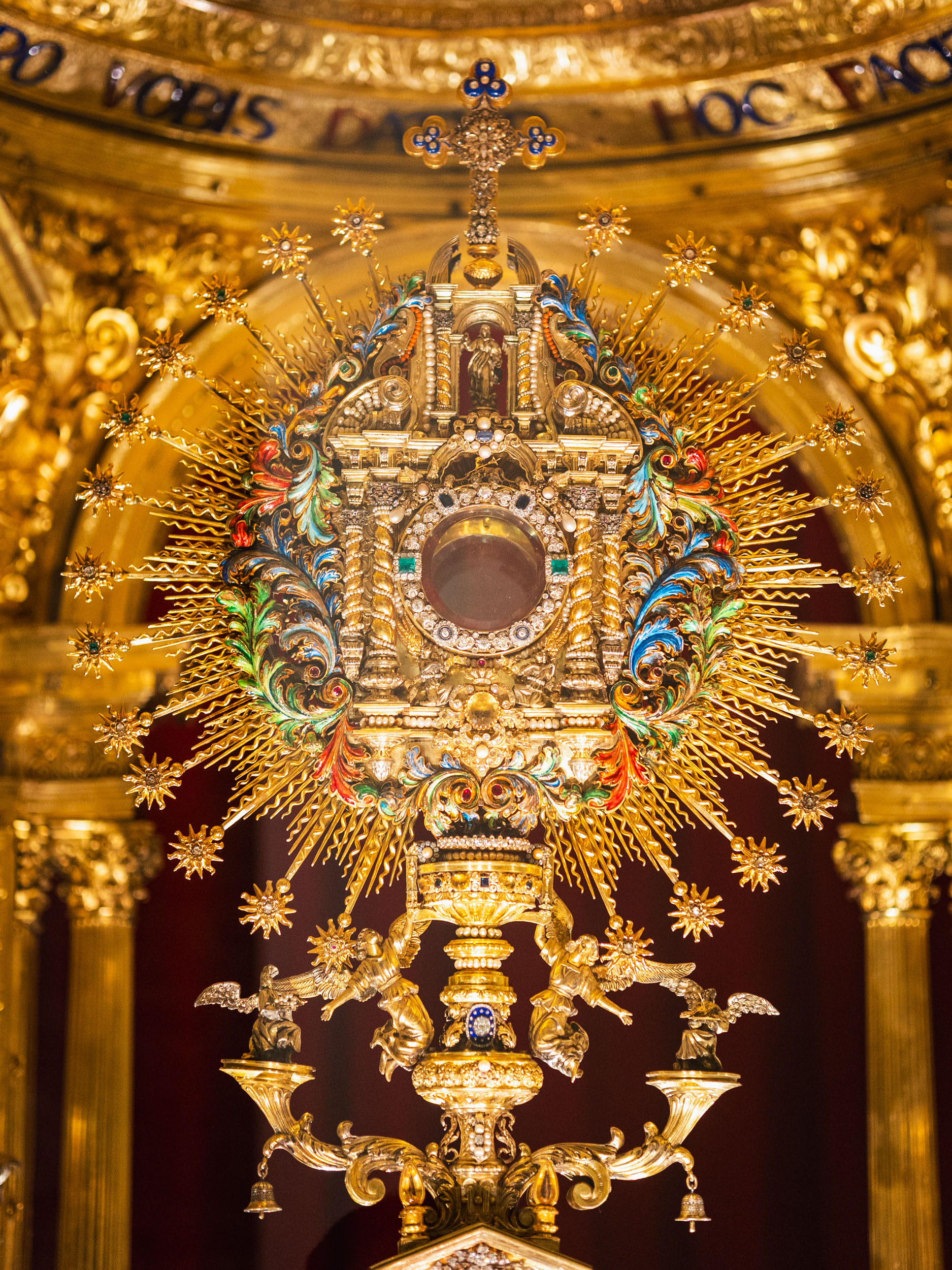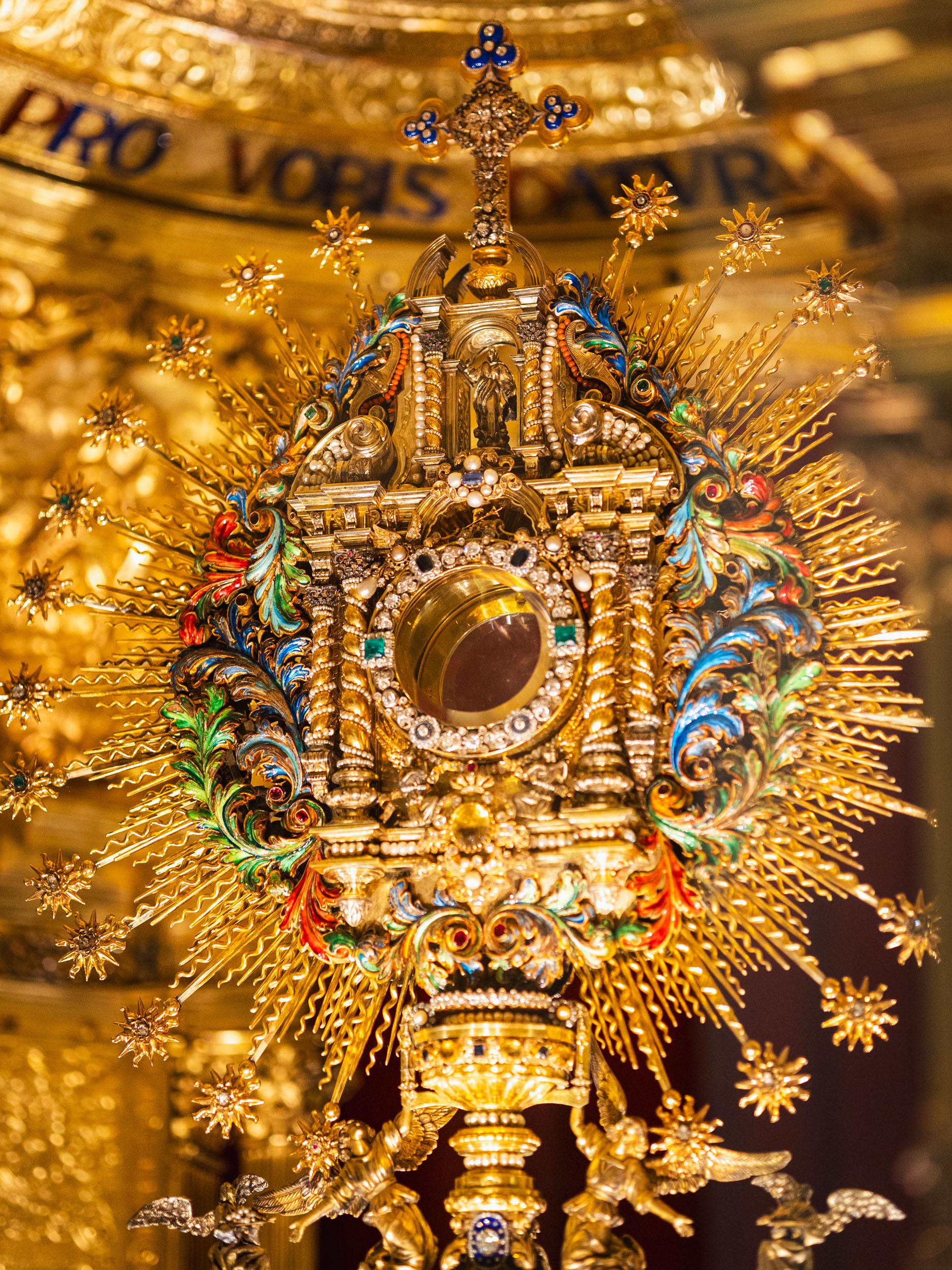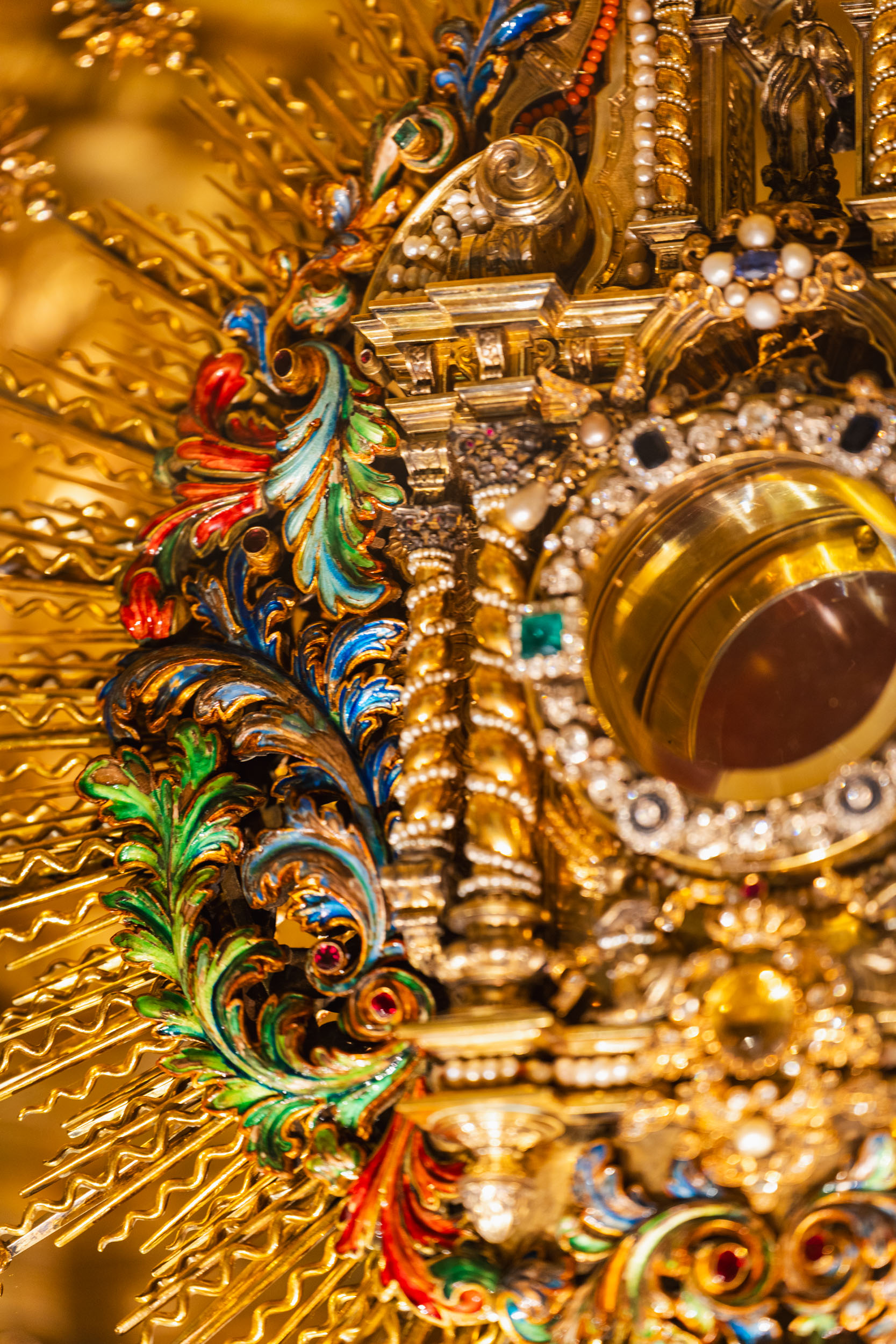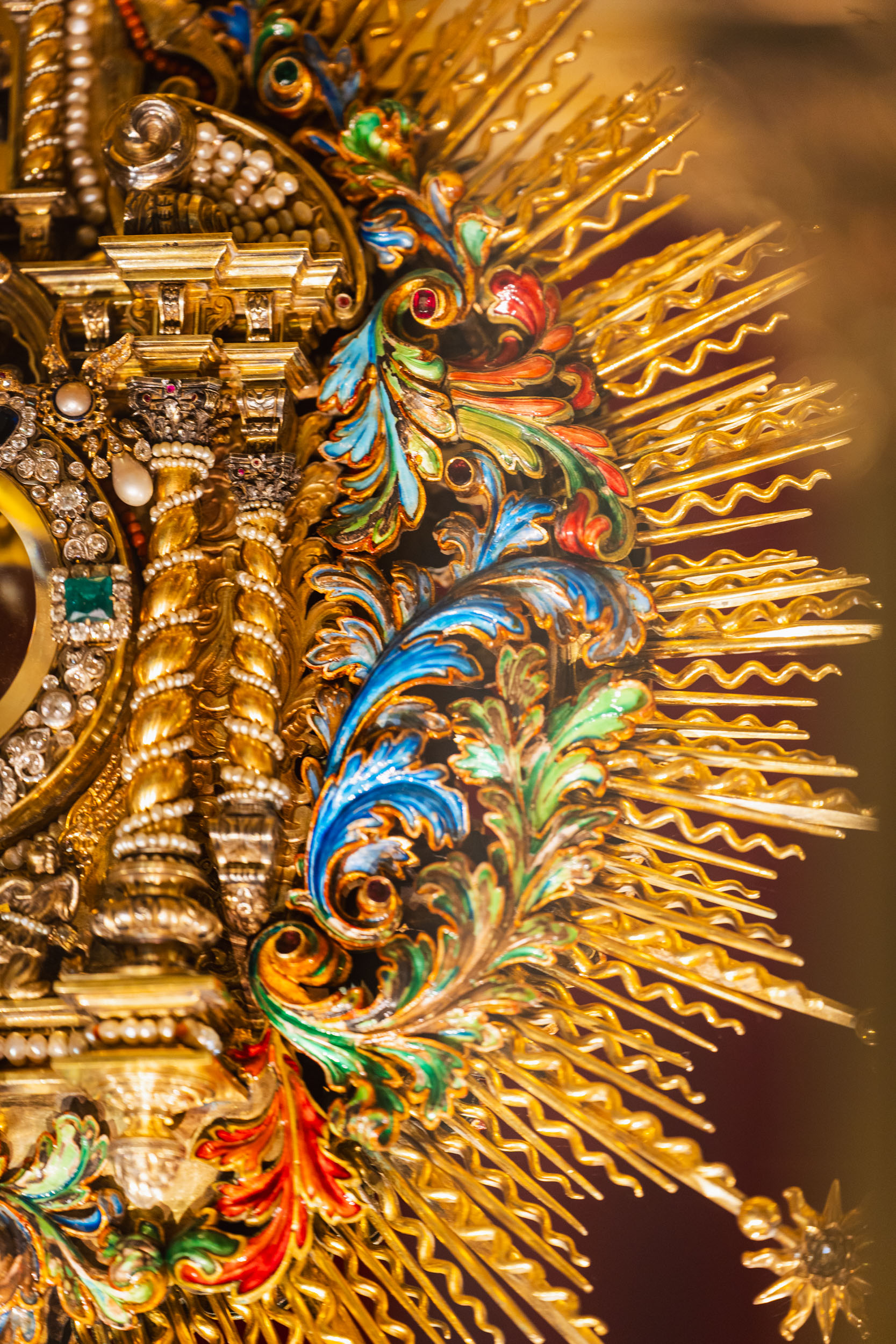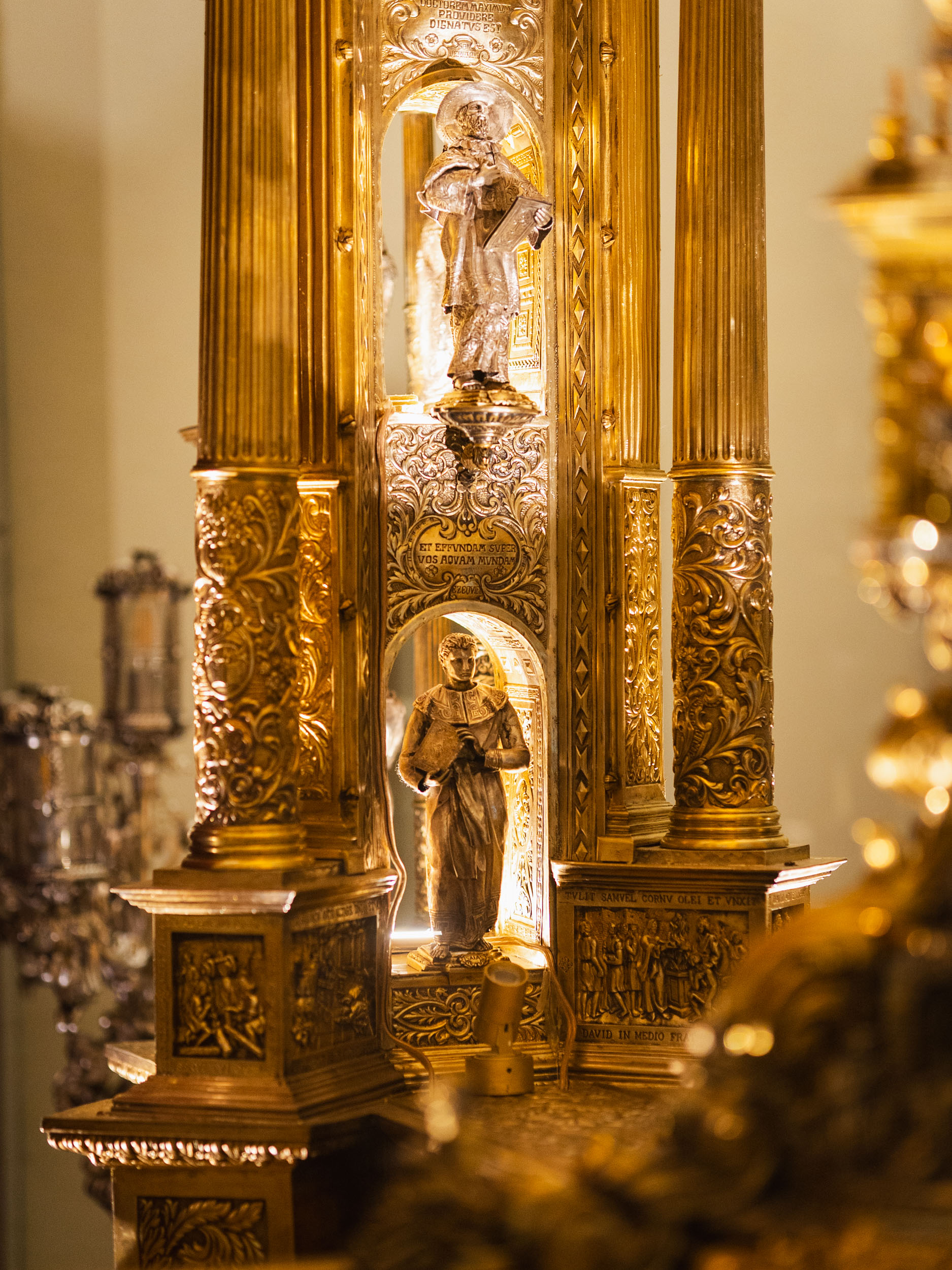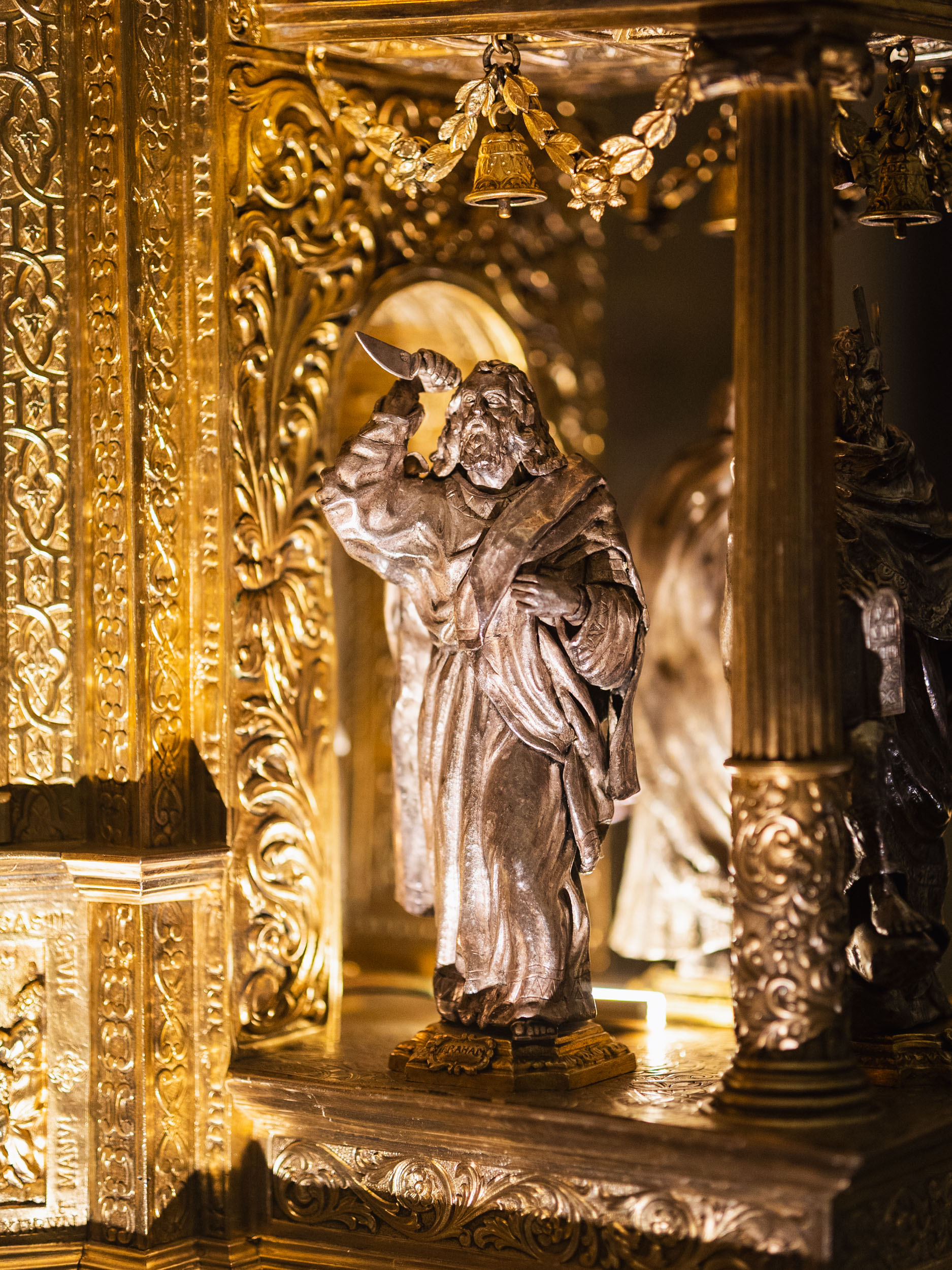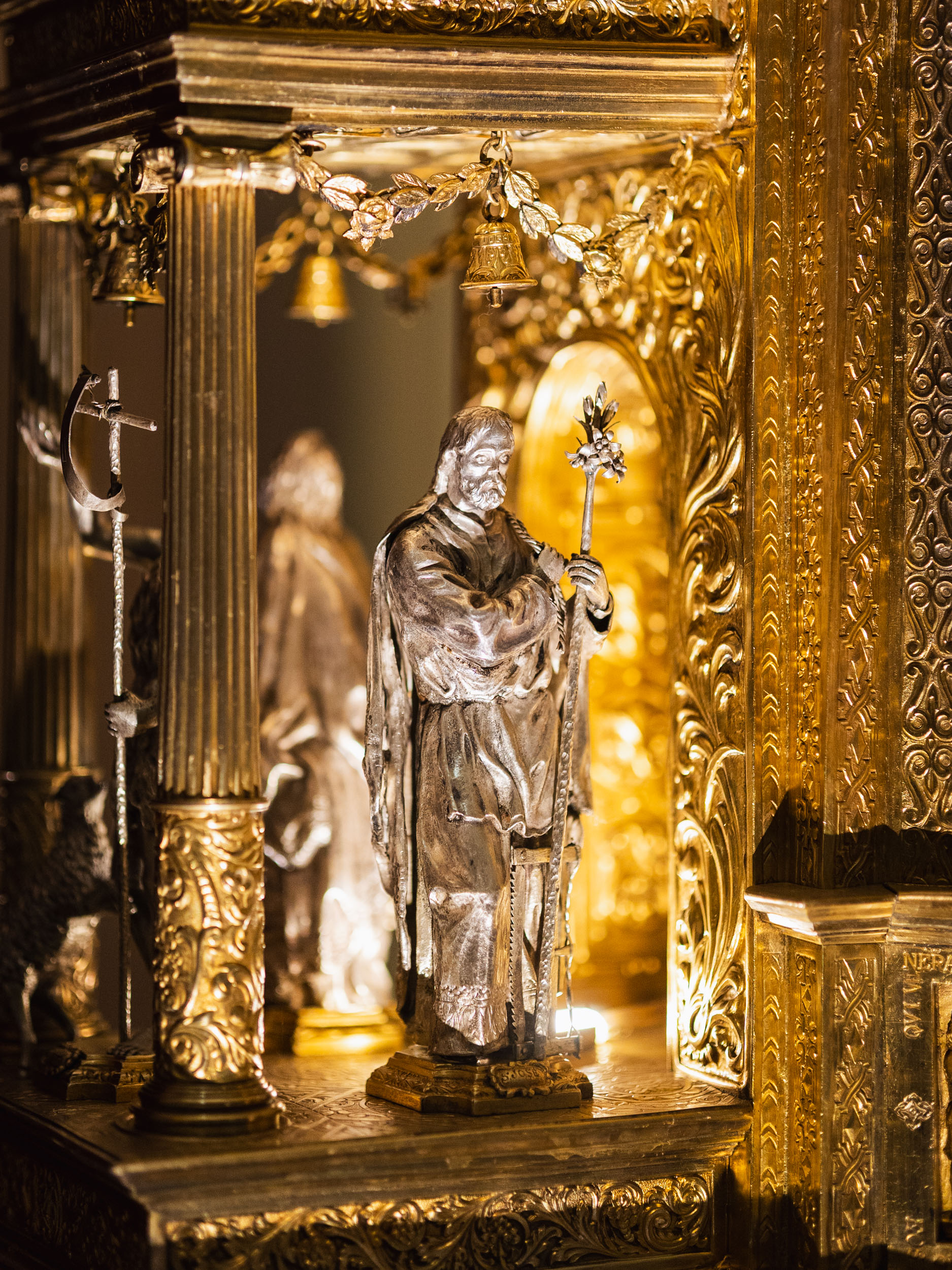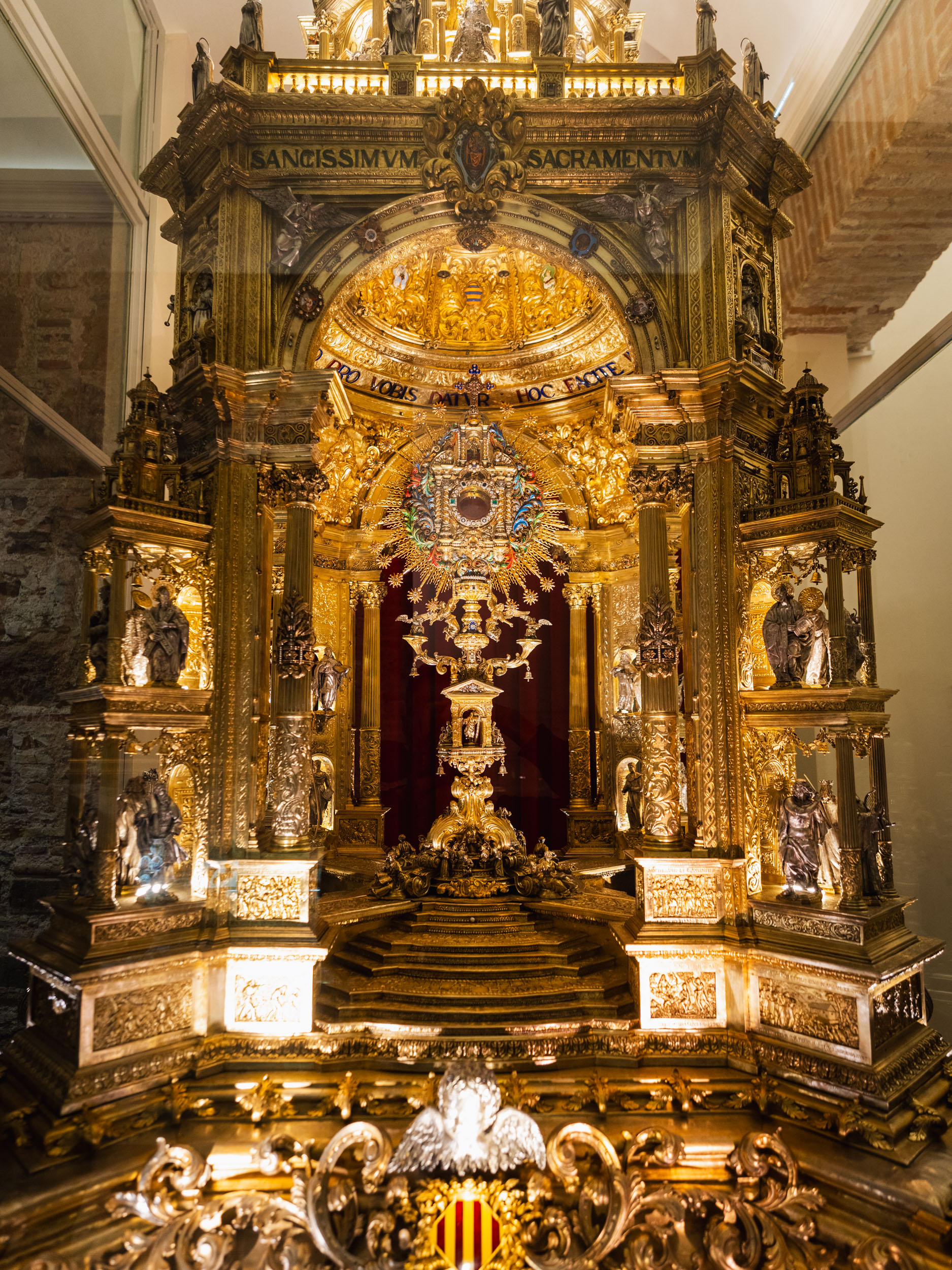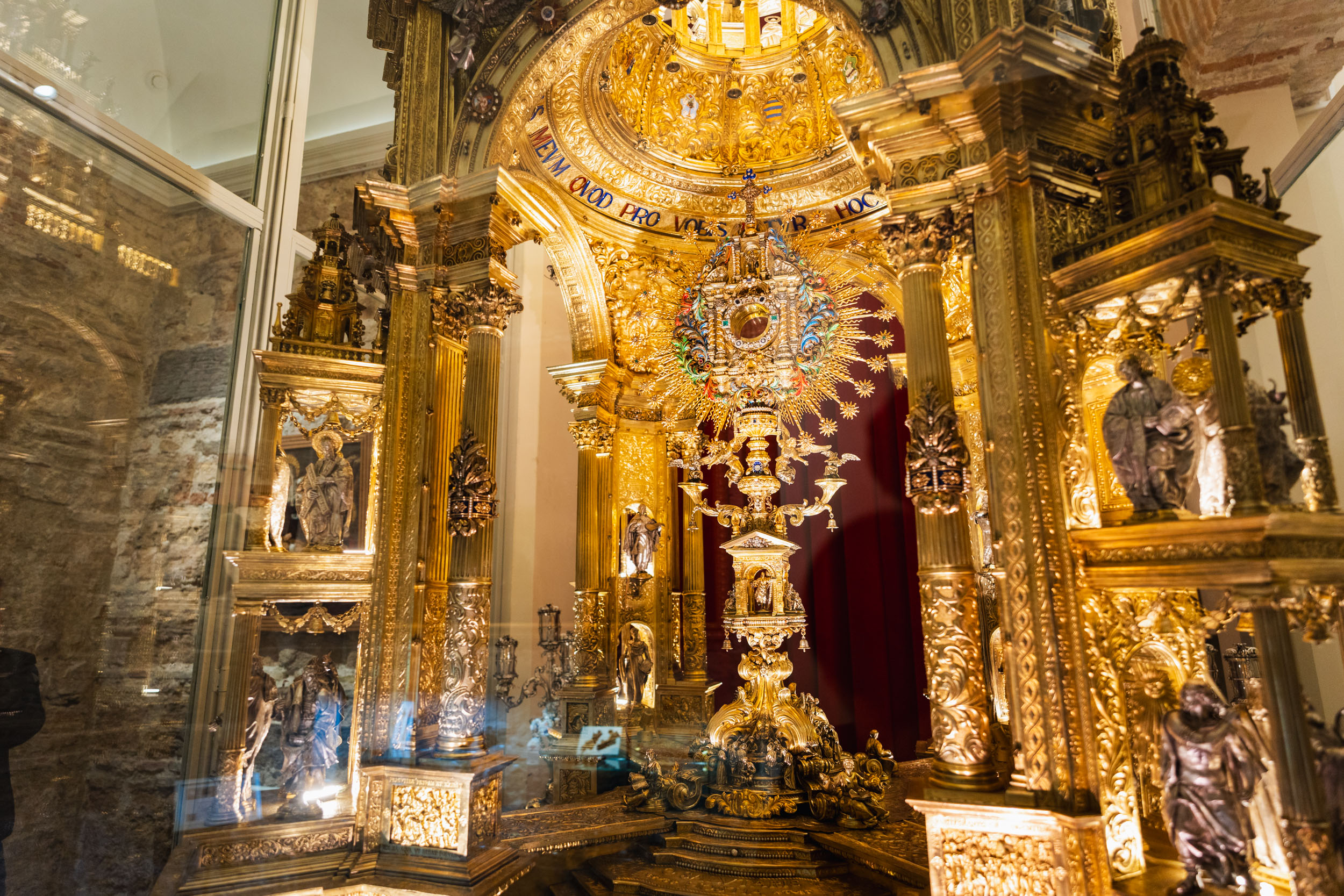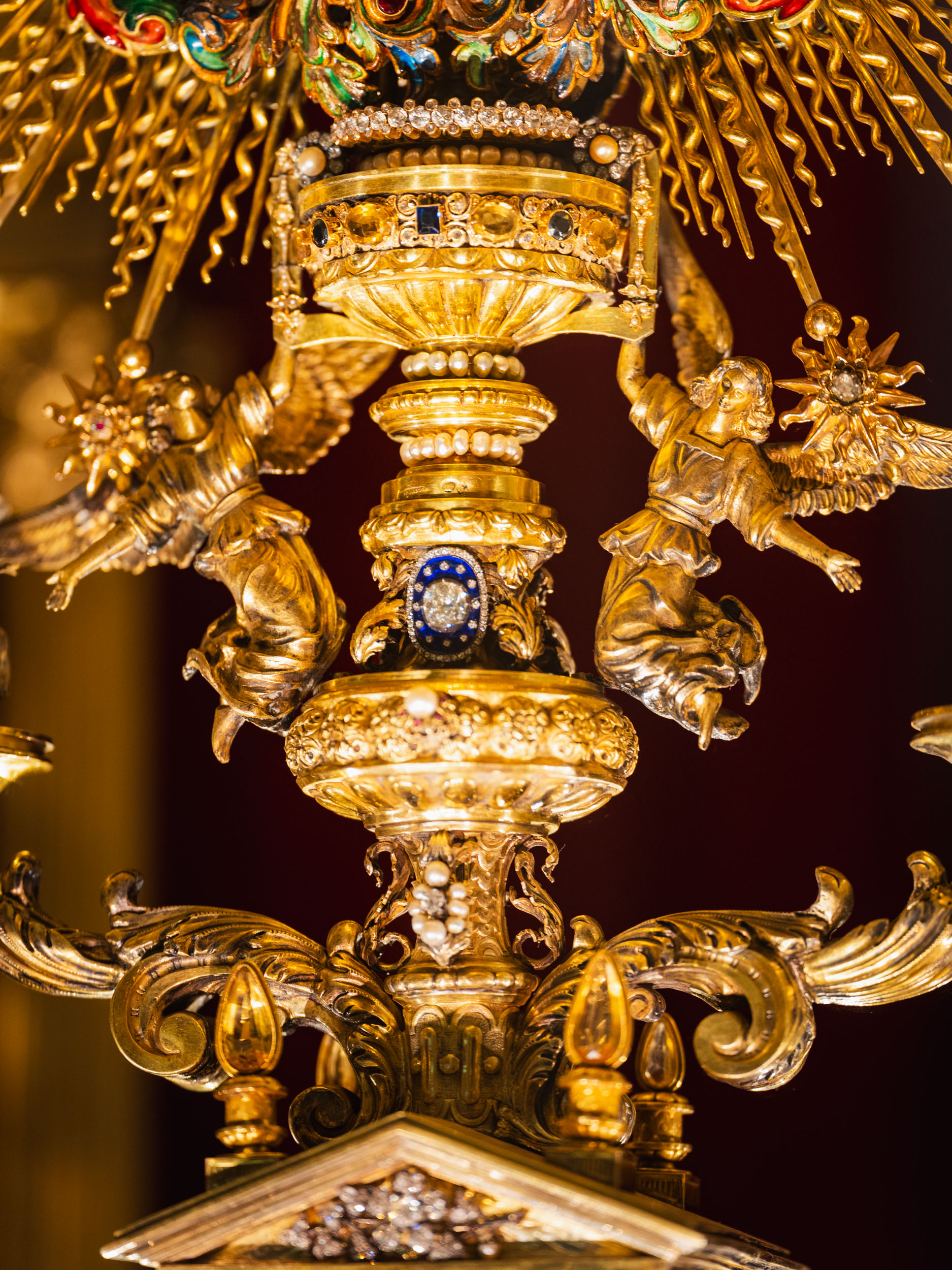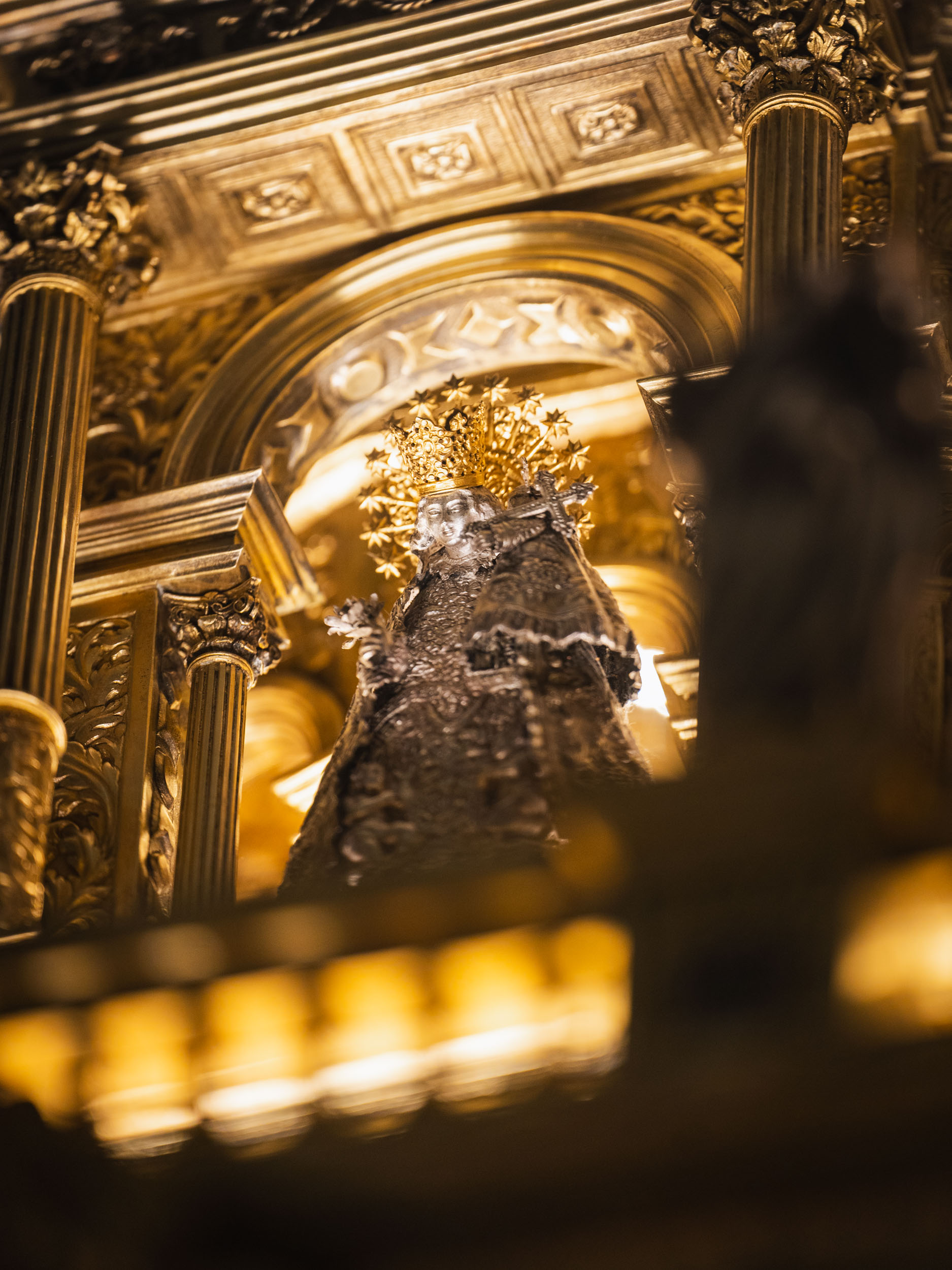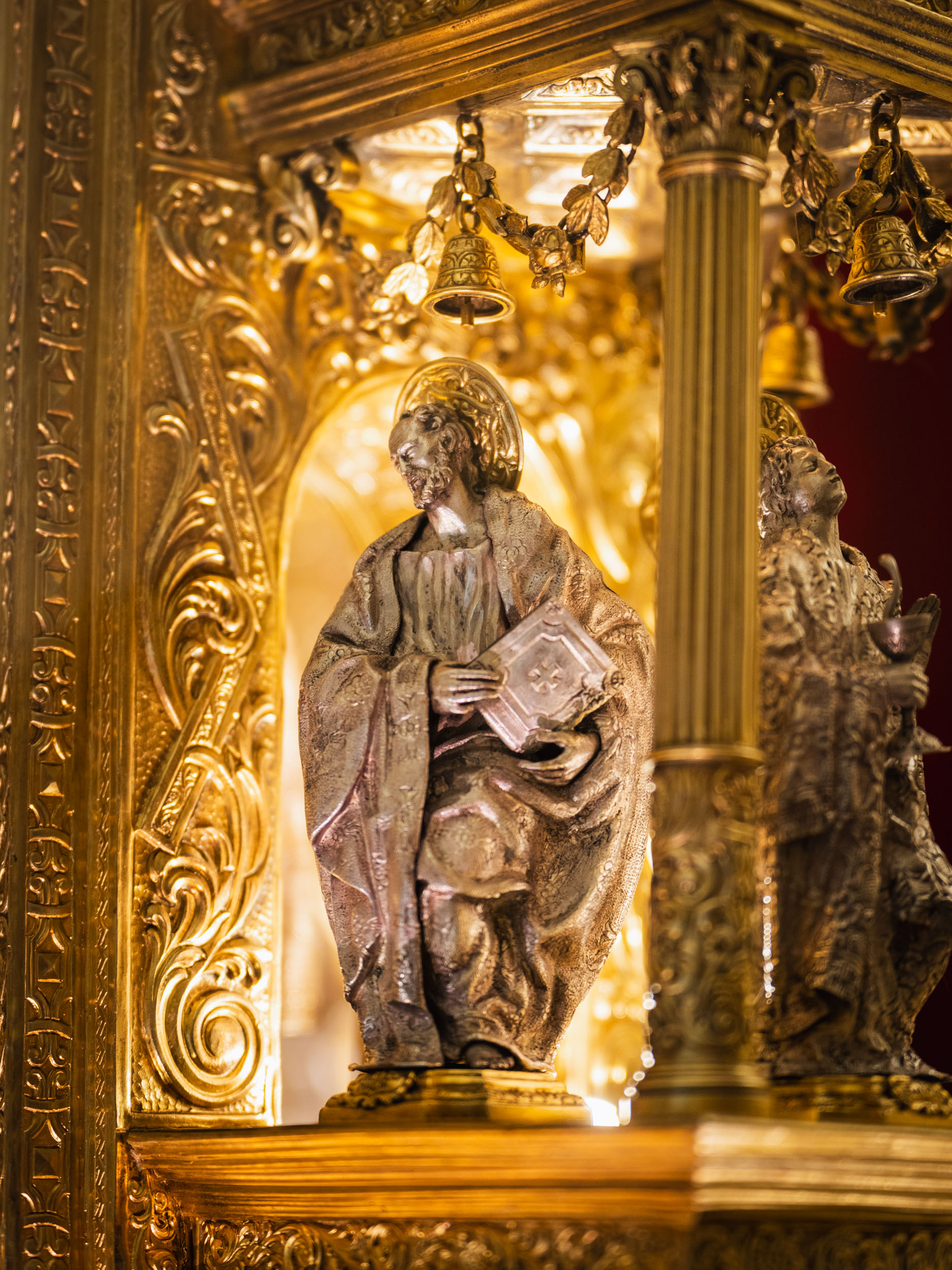
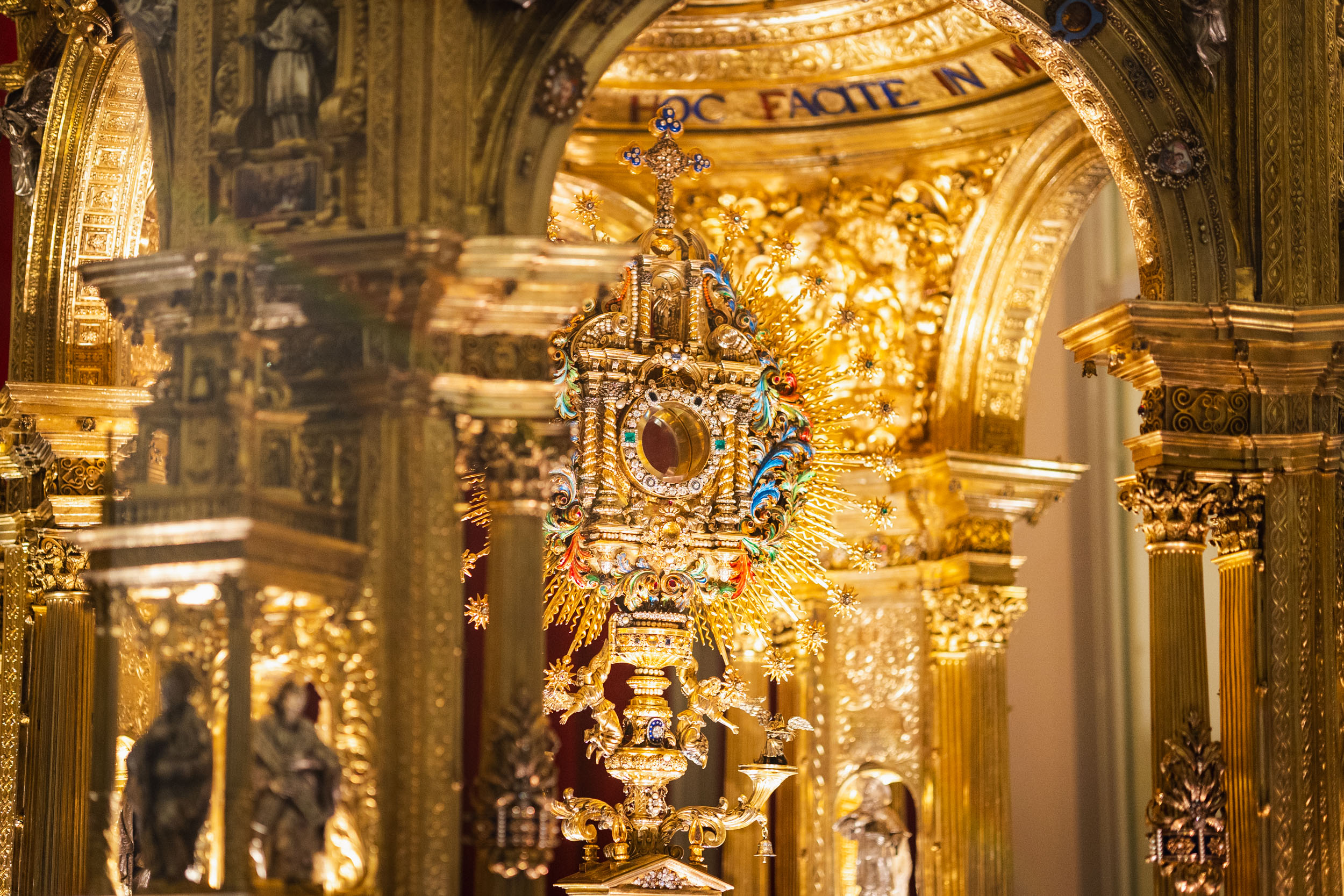
On my last trip to Europe I had a chance to find (be accident) the biggest processional monstrance in the world! But before we get there let’s talk more about what is Monstrance.
In the Catholic Church, sacred objects are used during worship to express faith and reverence. One of the most important of these objects is the monstrance. It plays a special role in honoring the Eucharist and helping believers focus their prayers on the presence of Christ.
What Is a Monstrance?
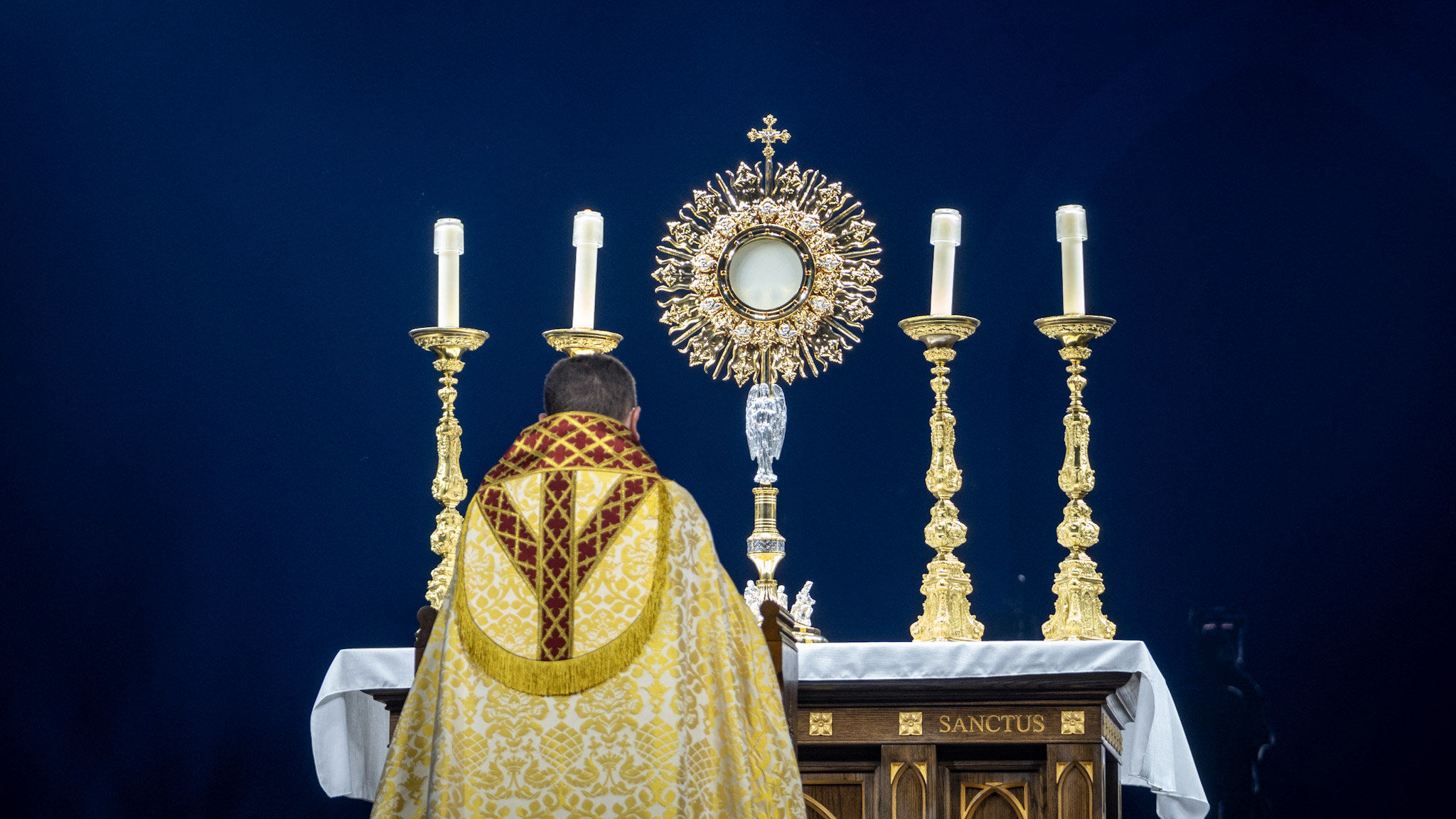
A “Monstrance” is a sacred vessel used in the Roman Catholic Church for displaying the Holy Sacrament, which Catholics belive to be the body, blood, soul and divinity of Christ found in the consecrated host. The word “Monstrance” comes from the Latin word “monstrare“, meaning “to display“. Its main function is to enable the faithful to see and venerate the Eucharist, especially during Eucharistic adoration and religious processions.
The Elements of a Monstrance
A monstrance is meticulously crafted and typically constructed from valuable materials to embody the holiness of the Eucharist. Its primary components consist of:
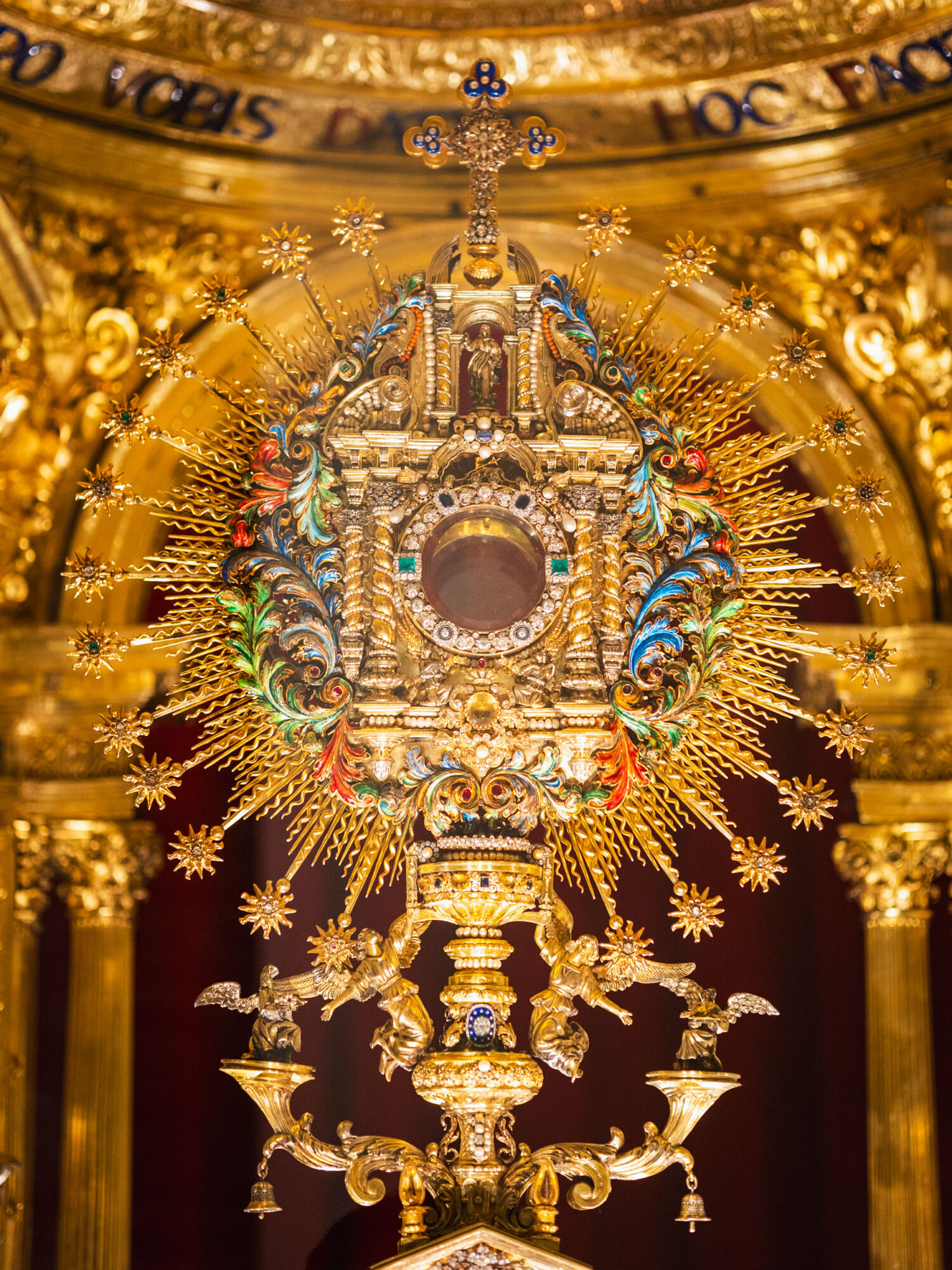
- The Luna (or Lunette): A small circular holder, frequently made of glass and metal, that safely contains the consecrated host.
- The Central Window: A clear section that enables the host to be easily seen.
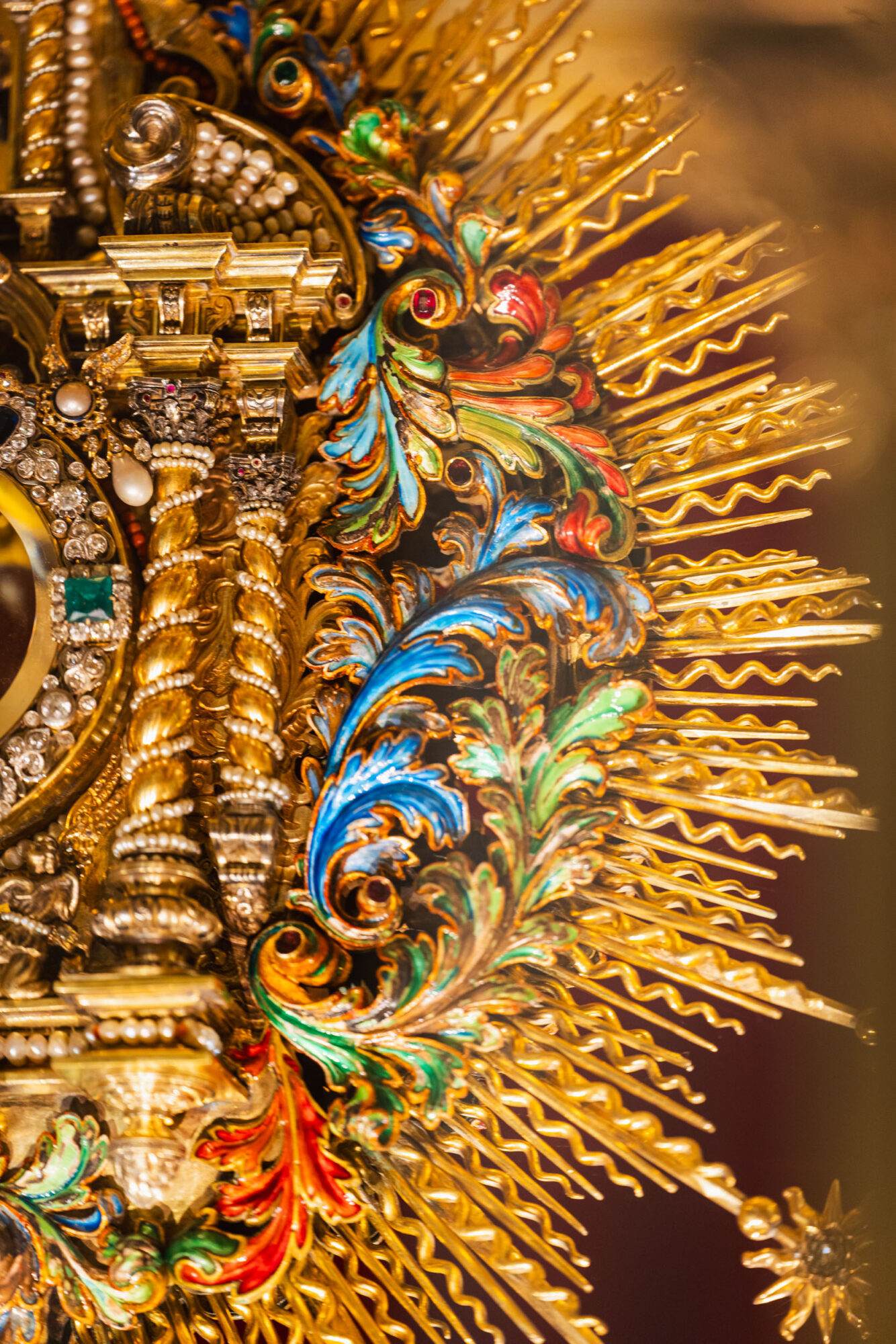
- Radiating Rays or Decorative Frame: Usually designed in the form of sunbursts, symbolizing Christ as the “Light of the World.”
- The Stem: Links the upper part to the base and facilitates the holding or upright placement of the monstrance.
- The Base: Ensures stability; it may be lavishly adorned with religious symbols or gemstones.
- The Cross: Typically found at the top, symbolizing Christ’s sacrifice.
What Is a Monstrance Used For?
A monstrance is used to publicly display the Holy Sacrament so that the faithful can pray and worship in the presence of the Eucharist. Its use is focused on devotion, reverence, and deepening faith in the real presence of Christ.
- Eucharistic Adoration
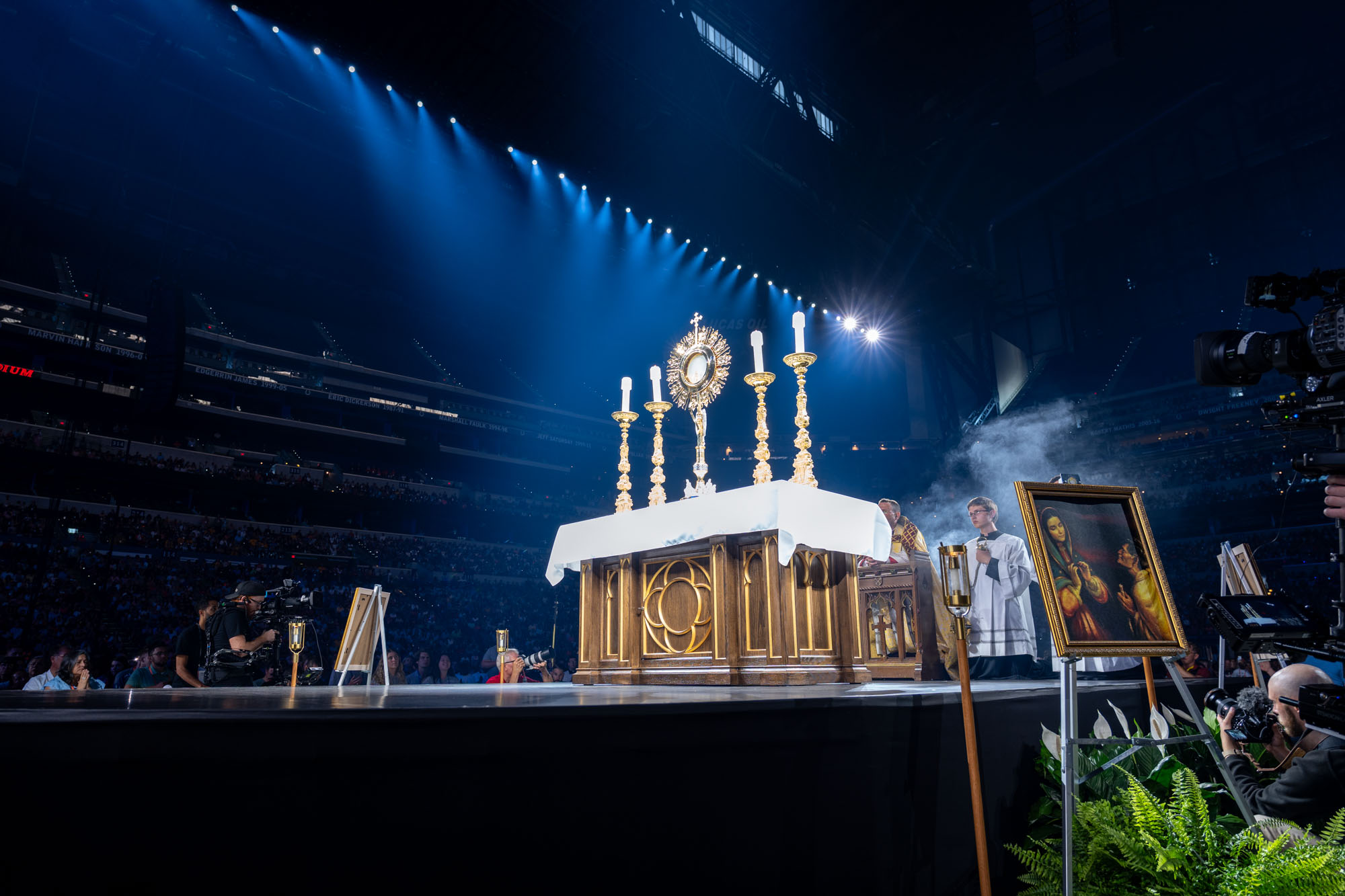
The primary use of a monstrance is during Eucharistic Adoration. In this devotion, the consecrated Host is placed in the monstrance and placed on the altar. The faithful spend time in silent prayer, reflection, and adoration, believing that Christ is truly present.
- Adoration of the Eucharist
The monstrance is also used during a special religious rite, the Benediction. At the end of the adoration, the priest or deacon blesses the congregation with the Holy Sacrament displayed on the altar. This blessing is considered unique because it is given directly with the Eucharist, and not just through words or gestures.
- Eucharistic Procession
During the Eucharistic Procession, especially on the Feast of Corpus Christi, a Demonstration is performed. In this procession, the Eucharist is carried out of the church to bless the community and publicly proclaim faith in Christ’s presence.
- Focus for Prayer and Worship
The design of the Demonstration helps to draw attention to the Eucharist rather than the person carrying it. Its transparent center allows the faithful to see the sacred host, helping them to focus on prayer, meditation, and worship.
- Teaching and Strengthening the Faith
The Demonstration also serves an educational and spiritual purpose. By visibly displaying the Eucharist, it teaches Catholics about the Church’s belief in the real presence of Christ and strengthens devotion, unity, and reverence within the community.
- Special Liturgical Celebrations
Monstrances are sometimes used at important church events such as parish feasts, retreats, and Holy Hours. These events encourage deep spiritual reflection and a strong connection to the Eucharist.
Why Can’t You Touch the Monstrance?
Touching the monstrance is forbidden out of respect and reverence for what it contains. Since Catholics believe that the Eucharist is the true body of Christ, the use of the monstrance is restricted to prevent dishonor, accident, or desecration. This practice also reflects the church’s emphasis on the sacred nature of religious objects and the importance of proper preparation and approval.
Who Can Carry the Monstrance?
Only certain individuals are permitted to carry the monstrance, including:
- Priests
- Deacons (in some contexts)
- Bishops
These ministers are ordained and trained in proper liturgical practices.
The Biggest Processional Monstrance in the World
(Valencia Cathedral, Spain)
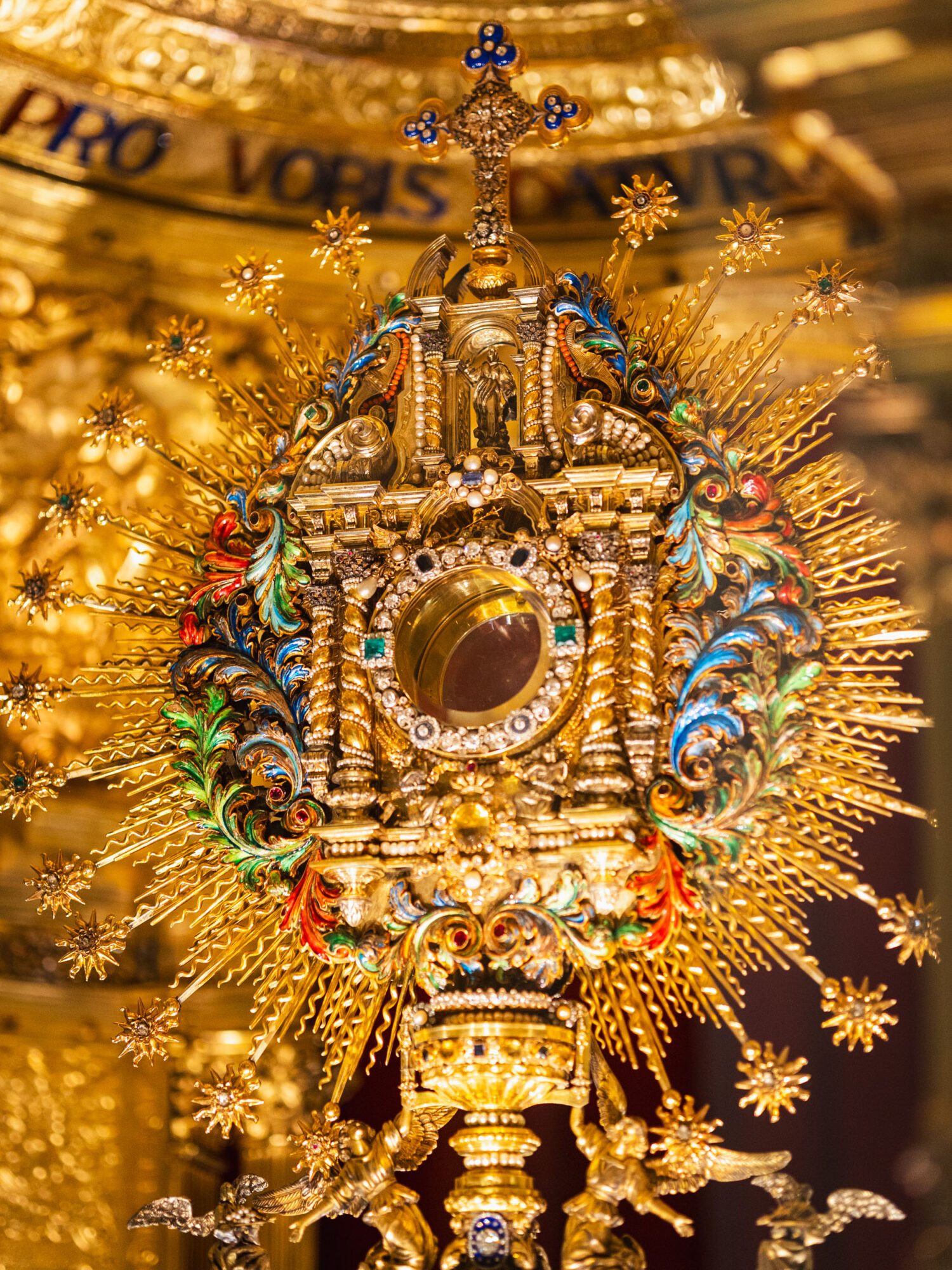
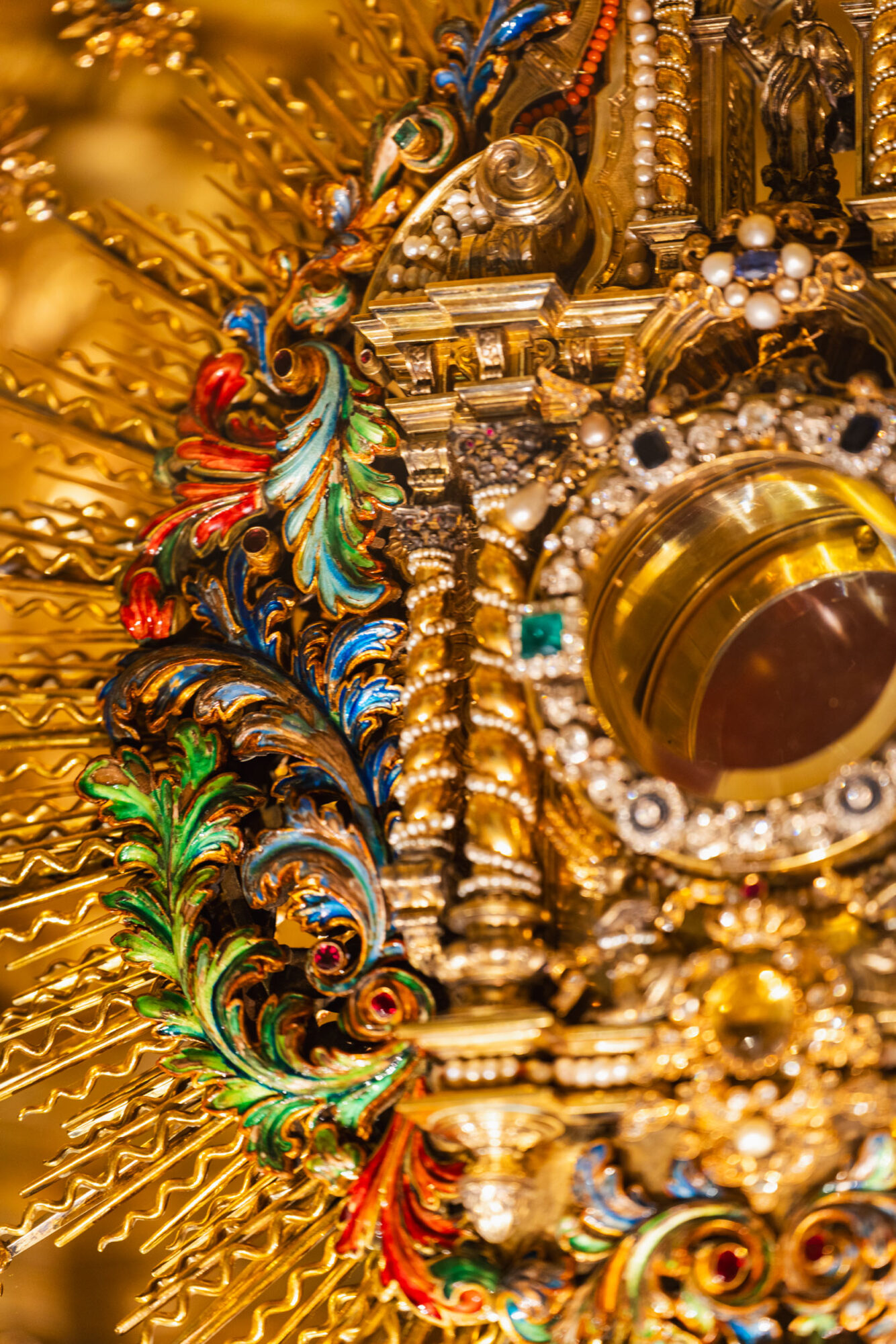
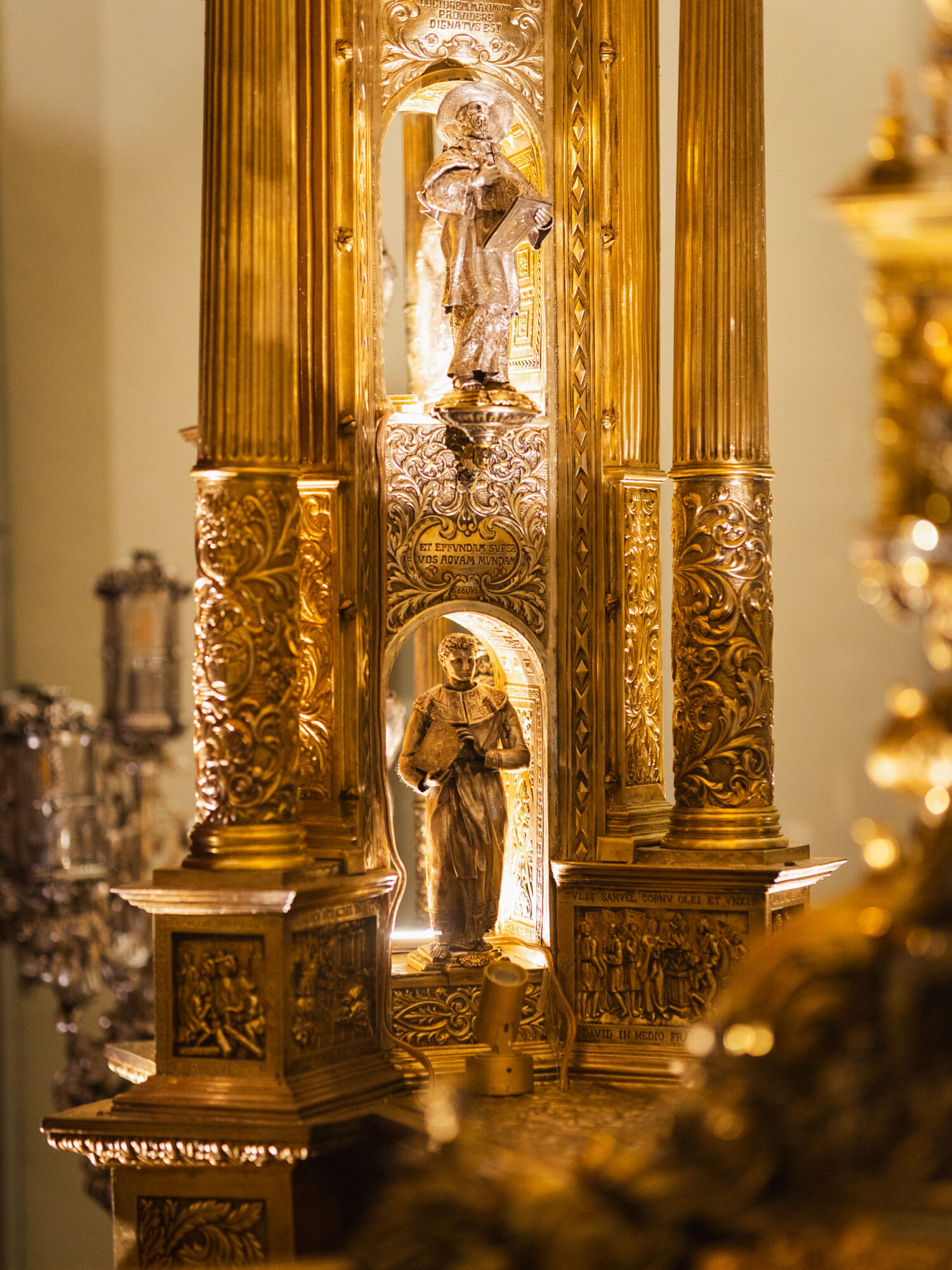
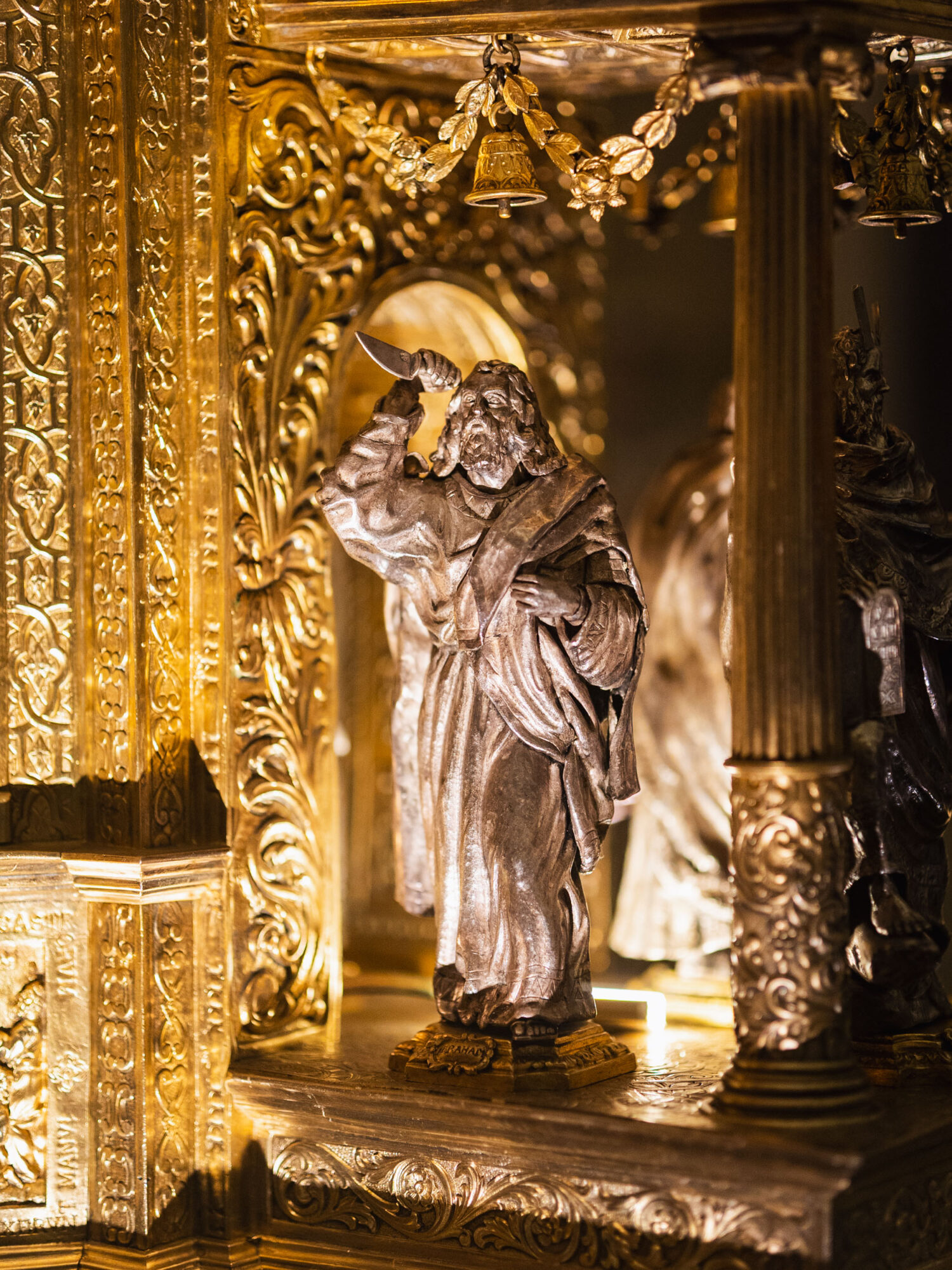
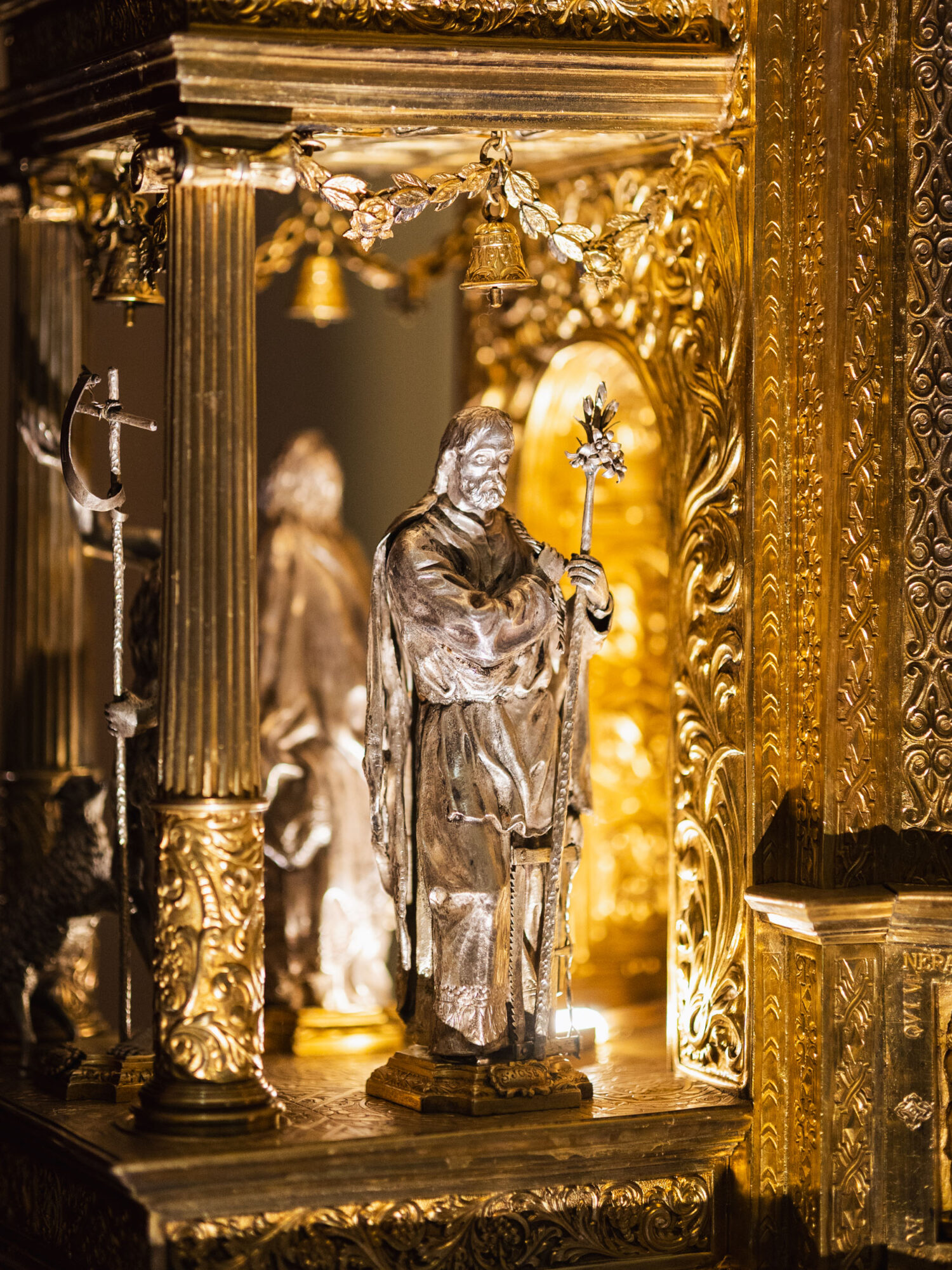
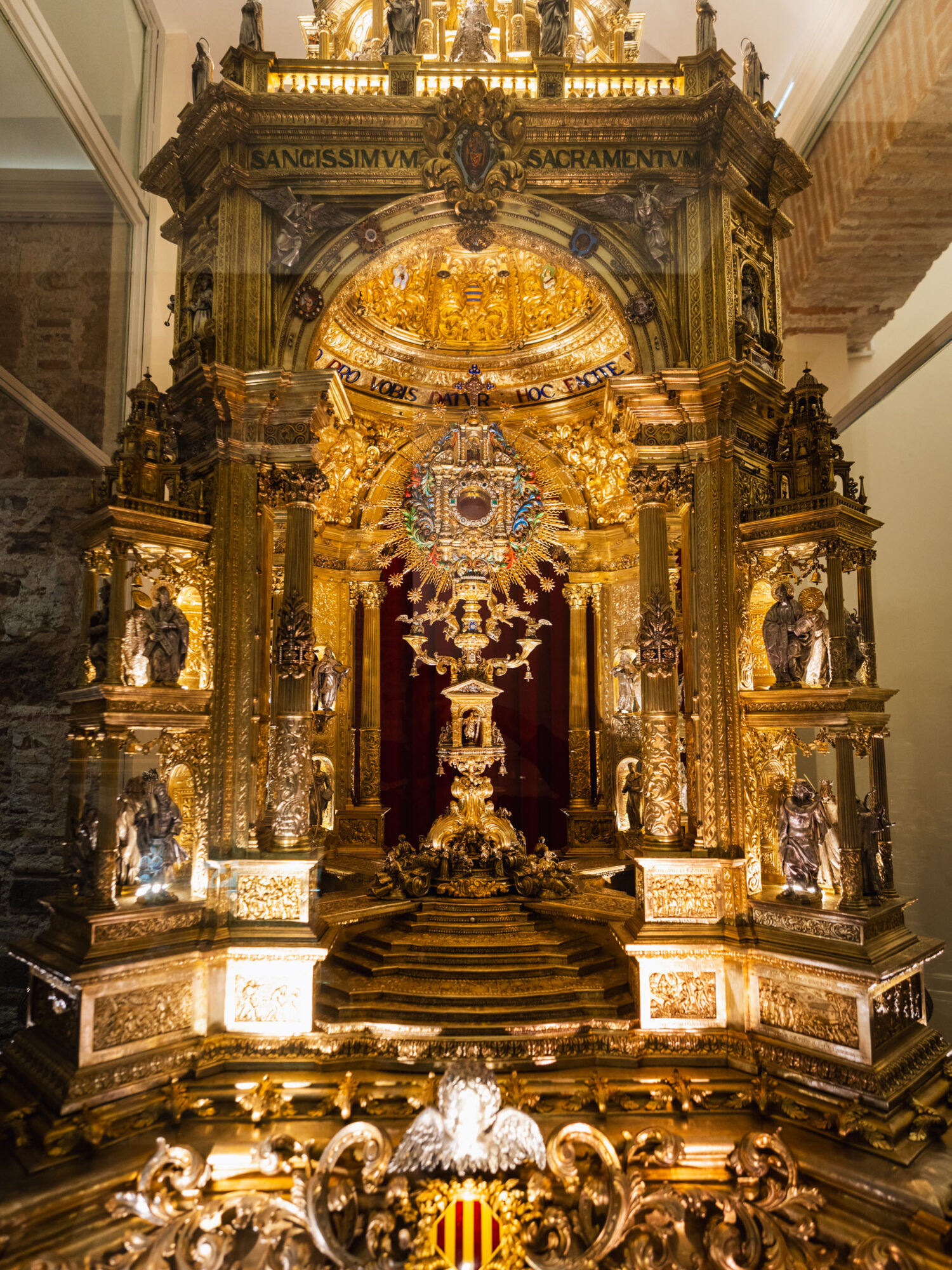
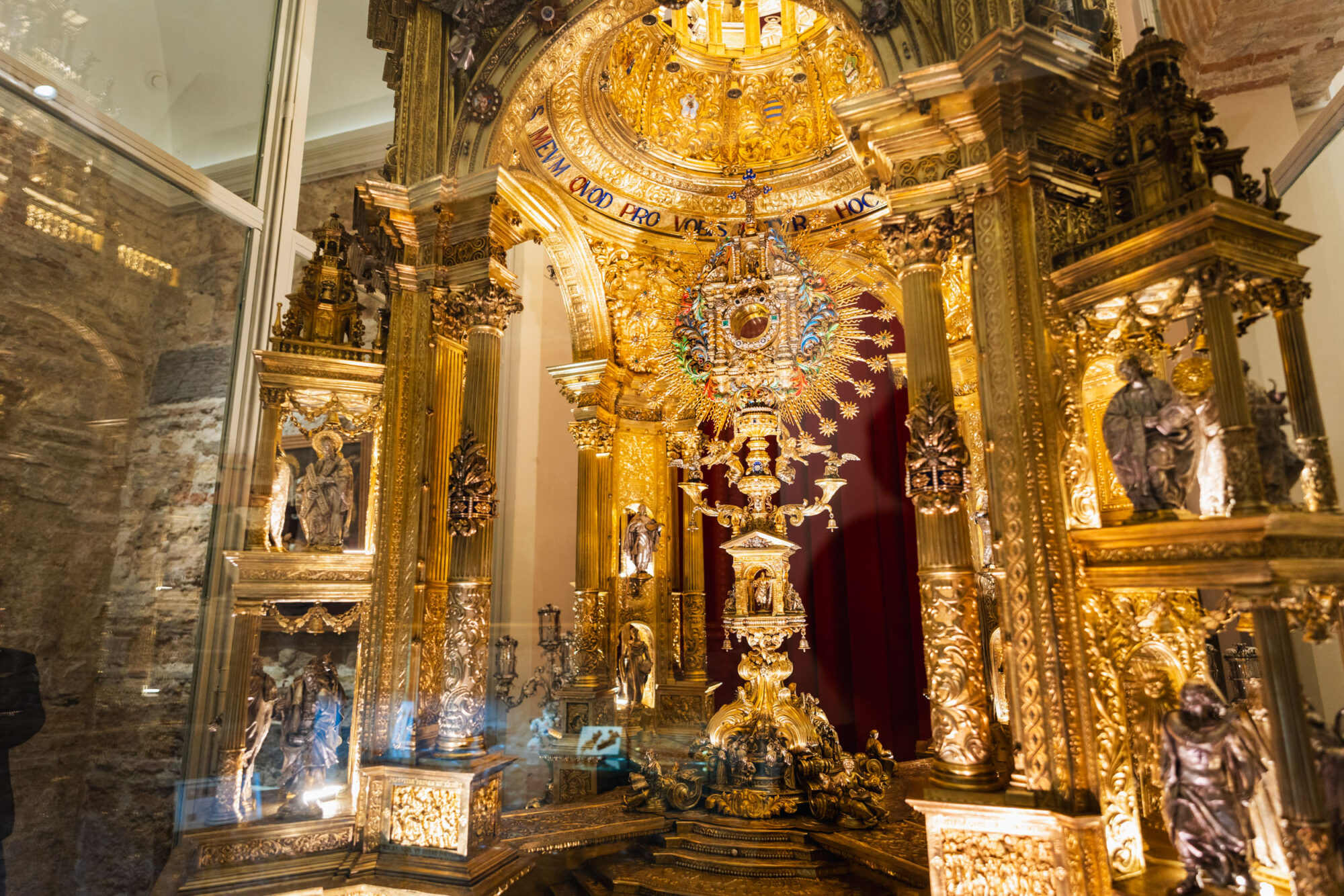
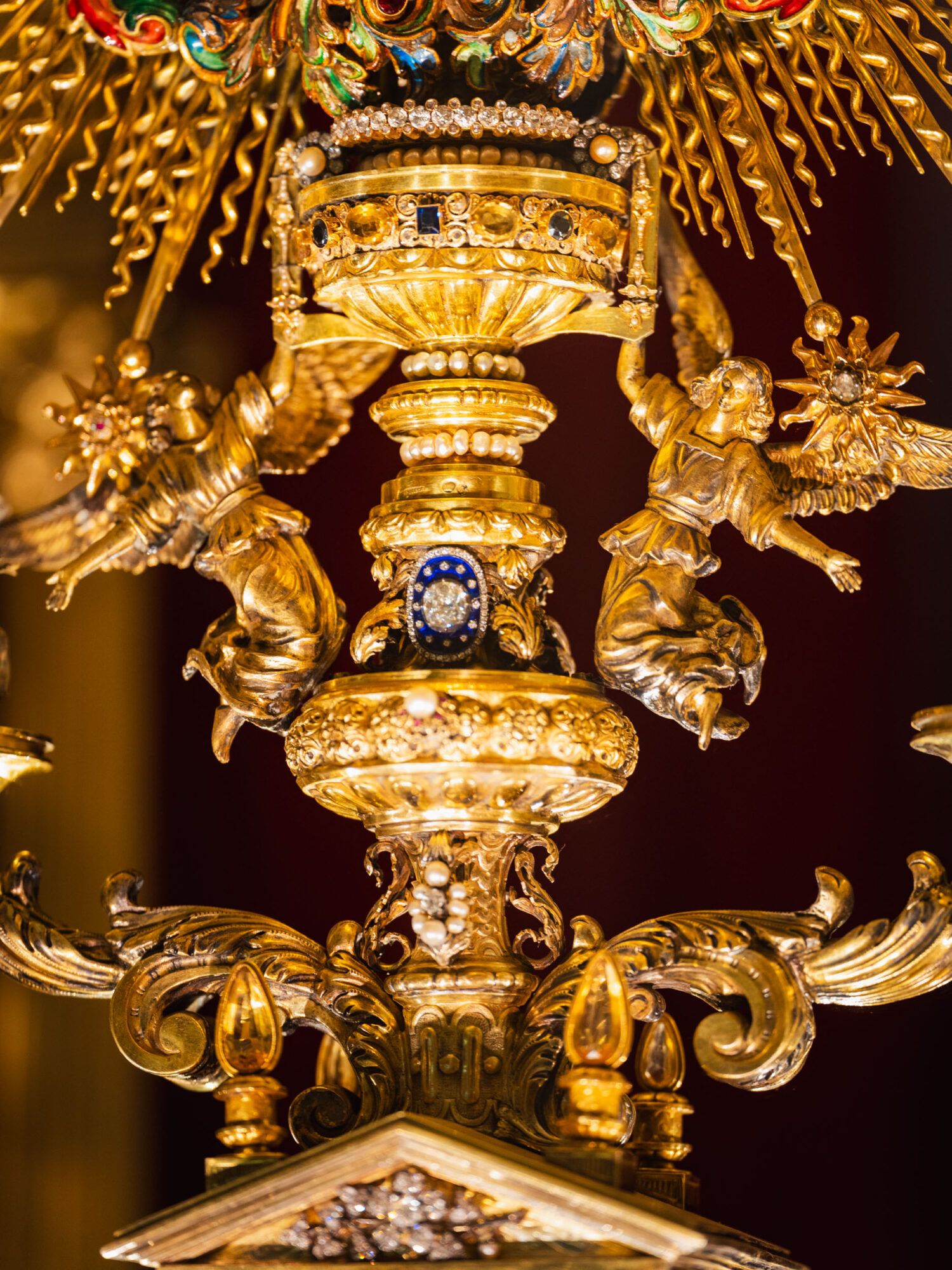
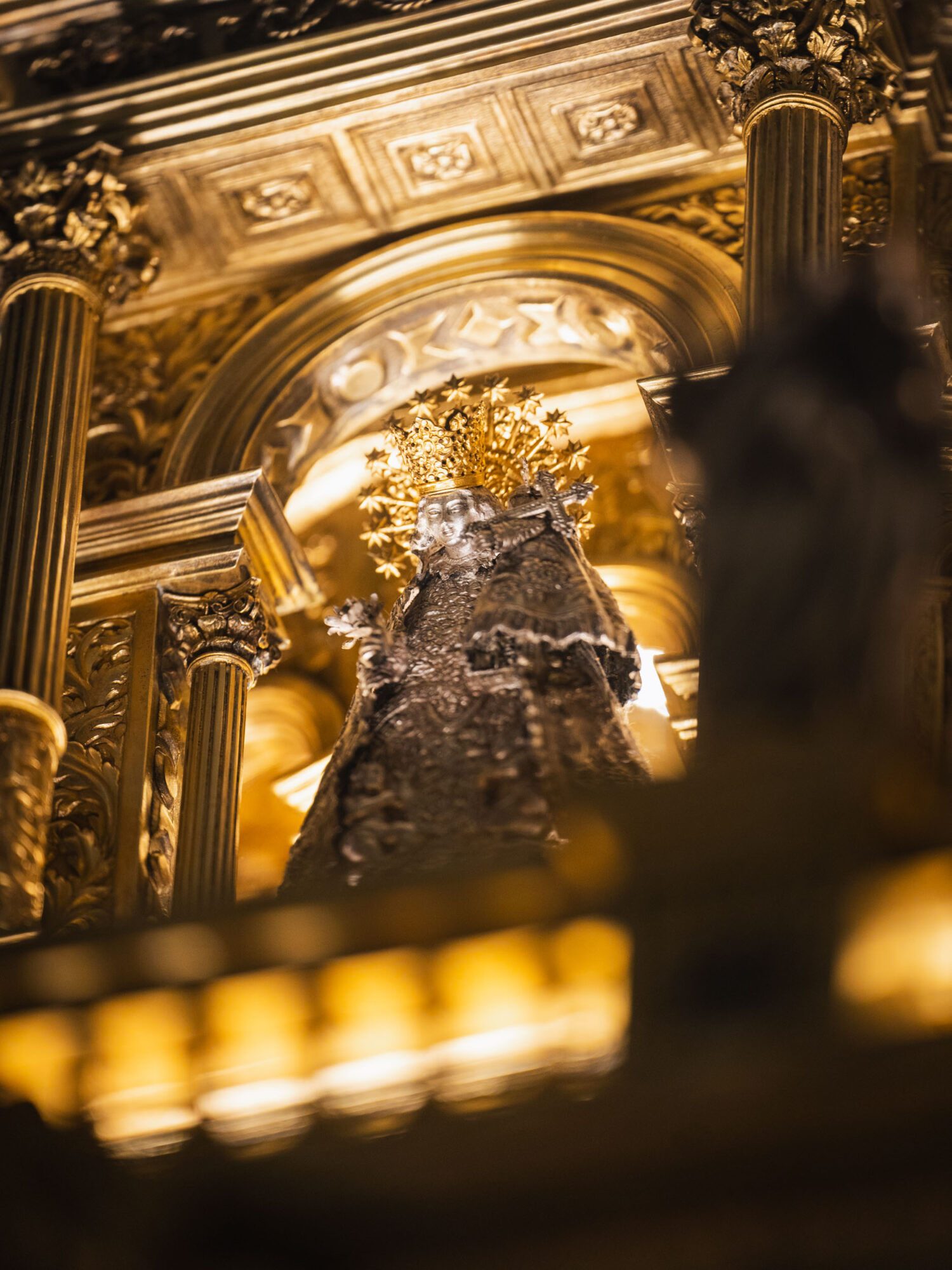
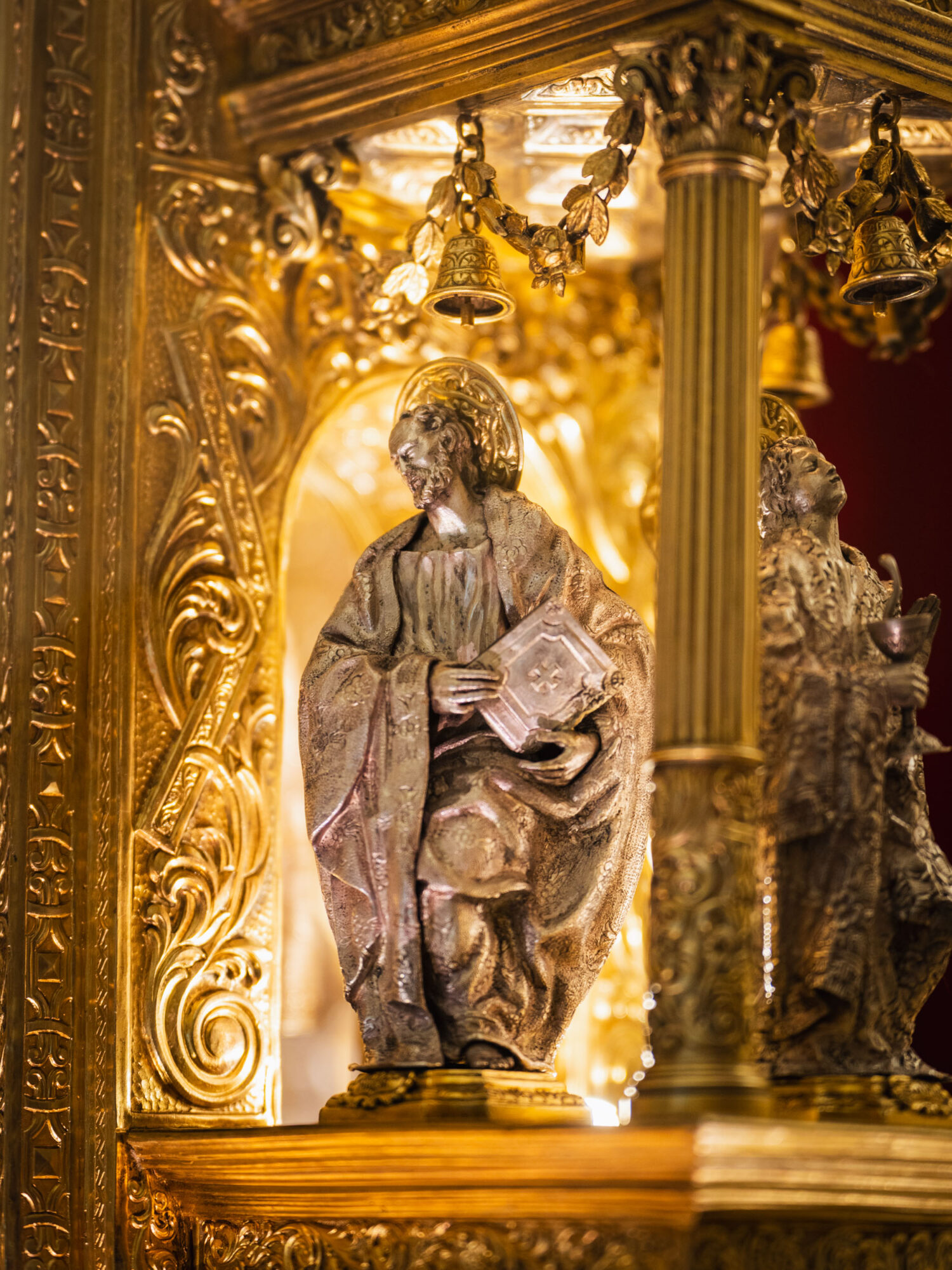
The world’s largest processional monstrance is located in Valencia Cathedral, Spain. Known as the Custodia de Arfe, it was created in the 16th century by goldsmith Enrique de Arfe. More than 6 feet (about 2 meters) tall, it is made of gold, silver, and precious stones. This extraordinary masterpiece is still used in major Eucharistic processions, especially on the feast of Corpus Christi, and is admired for both its artistic beauty and religious significance. Weights around 600 kilograms (1322 pounds).
Conclusion
This monstrance is much more than just a decorative object – it is a powerful symbol of faith, devotion, and reverence in the Catholic Church. Through its careful design, limited handling, and central role in worship, it reflects the Church’s belief in the real presence of Christ in the Eucharist. From small chapels to the magnificent Custodia in Valencia, each shrine serves the same sacred purpose: to draw hearts and minds to Christ.